the one unified project
  • Home
  • About
  • Contact
  • Blog
  • FAQs

The Power of Equality... One Perspective

1/20/2015

0 Comments

 
This week we reached out to people of all colors, all races, all religions and genders to talk to them about equality. Are all people really created (and treated) equally? Their answers may surprise you. Being equal doesn’t mean that we must all be the same. While equality on the large scale means that we are all treated the same in the eyes of the law, with fairness and with faith, if we’re ever to truly bridge the gap of our differences, and live together as equals, maybe the time has come to stop trying to force everyone to fit into one box, to all be the same. Perhaps the time has come to embrace our differences and use them to build up instead of tear down, to unite rather than to divide... to unify.
We must learn to live together as brothers, or we will perish together as fools.~ Martin Luther King Jr. 
Picture

WHAT IS YOUR ETHNICITY?
"Hispanic/Puerto Rican." 

AS A HISPANIC WOMAN (LATINA), DO YOU FEEL THERE IS EQUALITY IN AMERICA?
"I guess not necessarily as a Latina, but basically in general. It's hard to describe how I feel about this issue. For me, I don't see it hindering me too much because when I want to go for something, I just kind of go for it. In all aspects, as far as the business that I'm in, because I am Hispanic and I'm lighter skinned and don't have the traditional, stereotypical features, I don't think I'm stereotyped too much. But I can see it differently when my mom would walk into a room. I do see that. A lot is how people view you by what they SEE." 

DO YOU HAVE AN EXAMPLE?
"Walking into a supermarket, my mother who can be the most humblest looking person, is going through the checkout aisles looking for the sugar free gum. As she's moving through the aisle, this white lady grabs her purse as though my mom was gonna jump her. And I could see that as I was standing back. It's quite common. For me, sometimes I feel I'm the hidden person. People might feel more comfortable to slight Hispanics because they don't think I am or I don't look it. I've gotten "You don't look like them". I'm like, "What does it matter? I'm still Hispanic. My parents are." They may be a couple shades darker than I am, have more the traditional looking traits of Hispanic people, but you definitely see it. It's almost a shame to say, cause I kind of stand a little in the background cause I don't meet the criteria. But it's funny how people can pick up a little bit of an accent or that you do have an ethnic look and they get uncomfortable cause they want to ask and they have a need to know. But then try to dance around a question."

WHY DO YOU THINK PEOPLE HAVE SUCH A NEED TO KNOW WHAT SOMEONES BACKGROUND IS?
"Sometimes I think people are just interested in the culture because they want to visit the country or they know other people, they have a neighbor just like you. Sometimes, people are just uncomfortable and want to know for sure before they put their foot in their mouth." 

HAVING VISITED PUERTO RICO, HOW WOULD YOU SAY THE CULTURE IS DIFFERENT AS FAR AS EQUALITY OR RACISM GOES? DO THEY REACT TO PEOPLE THAT AREN'T PUERTO RICAN THE WAY PEOPLE HERE REACT TO PEOPLE THAT ARE?
"I don't think it's an equality issue there, they're honestly intrigued. We're referred to as outsiders and bring a touch of a different world the to them. At least the ones that have not gotten off the island. For example, they can tell the difference between a Hispanic black and an American black. We took our friends there and, even when I walk in, being light skinned, they know you're not from the area. They're curious about where you're coming from. I think it's also a need to know type of nature. I think Hispanics tend to be more warm about wanting to know who you are. I call it the "noosey" factor. (laughter). I remember when I was visiting a friend, and she was on the highest peak of a mountain and you think you're in a hillbilly town of Puerto Rico. You think nobody's paying attention and you're walking around. Let me tell ya, they knew I was there. I was trying to search for my grandmother's ex-husband. He was in the same town. Easy to locate for people. Give nicknames, descriptions. They don't know streets but they can tell you people. So I said I would try to visit him. It was getting dark, he ended up leaving his house, half blind, giving descriptions to what I said I looked like. People said they saw me in the neighborhood. People directed him to where they saw a newcomer from outside. They pay attention. 
My husband would travel there, and he was kind of uncomfortable. With American men (like her husband), you can walk down the street and if they're interested they won't gawk, they'll just look out of the corner of their eye, and then if you looked their way, they'd turn around. In Puerto Rico, they'll just look at you up and down, keep looking and basically unclothe you. I had to tell him that's just the way it is there. So it's not really a difference in equality, but more so culture. 
I think people just don't know how to close down the barrier of ignorance and just open up the mind to just accepting the differences in people. Culture wise, religion wise, you know it's there. You may not agree with it, then fine, just don't associate. Don't hang out. I don't feel I need to bash anyone for that. I can't understand it. You may not have the same traits or interests but you shouldn't look at someone differently because of it. (It's that way with religions too. If you don't believe everything they do, you don't fit in.) The way I look at it is if it's not hurting me and not hurting you personally, if you don't like it, walk away. They're not killing people. But they are "killing" people and are behaving badly towards them and bashing, just because they have something that sparks them differently. That's what makes them happy. They should be unhappy to make you happy?" 

TEACHING KIDS TOLERANCE AT HOME IS WHAT WILL MAKE ALL THE DIFFERENCE IN THE WORLD.
"I'll tell you something that just happened, something along the lines of equality with law enforcement or anti-law enforcement. There were two 13 year old kids at my kids school that walked up to my son and said "Hey, I just remembered, isn't your father a police officer?" His response was "Yeah, he was but hasn't been for the last three years. What of it?" They said "Well, your dad is on our list. My brother was arrested in September for selling drugs, so all cops are on our list. I'll be the one next to shoot a cop." 

OH MY GOD! I HOPE YOU REPORTED IT!
"It just happened this morning but I'm going to. And that goes to inequality. So, because his dad is a cop he gets targeted because your brother, the drug dealer, got arrested?"

HAVE YOU EVER BEEN AFFECTED BY INEQUALITY AS A WOMAN?
"In my business, a predominantly male environment (air duct cleaning), sometimes I am discriminated against more by women than men. I think they also think I should be dressed more butchy, like a man too. I get a call for a job, I report to the call, my guys are on the job. They answer their door and they're like "You? I have a problem with my system." I say "Yes, I'm here to help with that." They look past me and say "Where's the guy?" "I am your guy."  You get that. I've had times where I've found problems with someone's system and told them but I'm not credible enough because I'm a woman. This one lady was so adamantly saying no, that I was wrong. I told her to hire another person to come out and then we'd discuss it."  

DO YOU THINK THERE WILL EVER BE FULL EQUALITY?
"No, unfortunately. If you just treat people like people it would help. But as far as equal: that's like say, building a robot and making us all the same. That would get boring. There's good people and bad people. The laws are made to protect the good. This is why laws are made. Like needing your ID for things. (Then you hear) I don't carry my ID everywhere. Ok, then we'll just take any Joe Schmo that says who they are. There's changes and we have to adjust to that. 
As far as equal rights: I'm Hispanic but I have sisters that are black. I try to break that barrier with my kids. As kids, I didn't bring them up with prejudice, sometimes kids just see (by appearances). You just have to squash the negativity for things to be good. 
I personally feel the most racist people are black people. You have white people that are straight up rude and stuff. But then you have the same with even the younger generation thinking they grew up with Rosa Parks and Martin Luther King Jr., like they lived it. If you just (accept) that "alright, there are prejudices. People don't like you for certain reasons." Is it well known that it can be just for the color of your skin? Move on, do what works for you. Between sisters and friends that are black, they all say, yeah you kind of see it, they cough it up that they're ignorant. Some other people are like "I just go along with my business. I have a good job, go to school and make it. I don't let that negativity bring me down." So half the time that whole "I don't fit in", if you stop and sit and argue the topic and say people are not being fair to me and this is a whole conspiracy to me, you're the only one bringing yourself down and will stay on that hamster wheel not moving forward. You're gonna lose. Move forward. You want something better, move on."
0 Comments

The Power of Equality... One Perspective

1/19/2015

0 Comments

 
This week we reached out to people of all colors, all races, all religions and genders to talk to them about equality. Are all people really created (and treated) equally? Their answers may surprise you. Being equal doesn’t mean that we must all be the same. While equality on the large scale means that we are all treated the same in the eyes of the law, with fairness and with faith, if we’re ever to truly bridge the gap of our differences, and live together as equals, maybe the time has come to stop trying to force everyone to fit into one box, to all be the same. Perhaps the time has come to embrace our differences and use them to build up instead of tear down, to unite rather than to divide... to unify.
We must learn to live together as brothers, or we will perish together as fools.~ Martin Luther King Jr.
Picture
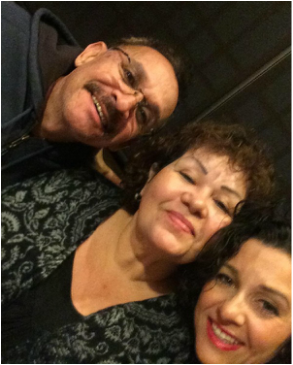
AS AN AFRICAN-AMERICAN WOMAN, DO YOU FEEL THERE'S BEEN A POSITIVE CHANGE, A REAL DIFFERENCE, IN EQUALITY SINCE THE TIME OF MARTIN LUTHER KING JR (THE ERA OF THE CIVIL RIGHTS MOVEMENT)?
"I guess my answer would've been different if I hadn't seen "Selma". I watched "Selma" last week with Senator Hughes and his wife and a bunch of other people and we had a panel discussion about what we were going to see. I just finished writing a piece about this. Let me tell you what my point of view is: it's unconscionable to me that people died, were beaten and humiliated and treated like dirt under someone's feet and that you had a government that was fighting the President of the United States at the time, to make sure that we did not have the right to vote. To 2015 where we have the right to vote and we just completely ignore it. So in one sense, I feel like we've come a long way, in another sense I feel like we've kicked ourselves and pushed our own selves back. Because if we were taking voting responsibly, showing up at the polls, when we needed to, instead of 10-15% after all our ancestors had done to get us this right, then we wouldn't be having Fergusons and what's going on in New York City and what's going on a around the country. Because we would have people in office that would take our demands seriously because they would see that we were clientele that were coming out to vote and they would take our words responsibly. I am from another place, so my perspective has always been one of where I was born and raised, and for me, education is completely important. That you give back, community is completely important. For me, I'm frustrated. I'm completely frustrated by what I see on many levels. I see disenfranchisement for people of color, but I also see it for people who are poor, for people who are marginalized because they may have autism. If you don't fit into that tiny space, in that tiny window of normalcy, or that crowd, or whatever it is that they deemed appropriate to fit into that window, then 95% of us are just sitting on the peripheral waiting and hoping for goodness to come our way. This is probably a bad day to be talking to me about this because I have been thinking about it."

MAYBE IT'S A GOOD DAY THEN.
"I've been thinking about it a lot. For instance, we have our social media pages and I wish we would use them more responsibly. Everything I put on my page is intentional. Everything. Down to the potpourri of "mister" (the love of her life). Because in a sense, there's people on my page that believe people of color don't have normal families; That our sons are jail birds; That we're not married; That we're not educated; So everything I post is about the normalcy that happens in a regular, everyday family, except that we happen to be black. People are dying to meet "mister" because they've had this entire visual of this wonderful man who is an educator, he has five degrees, he's smart, he's funny, he gets on my nerves, all of it. I want people to see the human before they see "mister". It may seem like I'm just posting, but I'm very intentional. Do you know how hard it is to raise children of color in this country?"

I DON'T.
"We're told that if our children pull their pants up; that if we take them to pre-school and teach them all the words that they need to know by the time they get to kindergarten; we're told that if we keep them out of trouble and that we've done all the right things, that America will be just fine with them. That is just not true. I've done all of those things and then some. Both of my children came out of school with no detentions or suspensions. Neither one of them sagged their pants. And yet they're still targeted. They're targeted by teachers who don't believe they can do well. They're targeted by people outside in our authority that look at them and see the color of their skin instead of the beautiful, wonderful souls that they are. And it is now my charge, as a mother, and I tell them this all the time, "Don't be bitter. Get better." Every time someone targets you, in some (negative) way, do not take that and turn it into (bitterness). Turn it into "now how am I gonna turn this into something better for my life and those around me?" That's what I have to teach my kids every day. I worry about my kids everyday. As long as things stay the way they are in this country, then there's always this fear that we walk around with. It's unfair, but it's our lives. So what do we do?"

HOW HAVE YOUR CHILDREN BEEN TARGETED?
"My 22 year old had his hand broken by a cop when he was 15. Called a nigger. And then when we fought it, cause they met the wrong mother, when I filed the formal complaints against the police department, they called over here (the township) to where I live to find out what they had on this kid, but my kid had never been in trouble. We finally got to court, they wanted to take it to the youth aid panel, which they give to first time offenders. But I was like "No thank you. He didn't offend anybody. He didn't do anything. He asked you a question and you called him a nigger and threw him to the ground and broke his hand." For him, I just said to him "You just continue to do well in school. We will fight your battle for you." It took a year. But when that cop got into court the first time, he said that my son threw a bottle at a little white girl, he was careful to say a little white, blonde hair, blue eyed girl who was under two and that he could've damaged her and given her a concussion. The people that were in the courtroom who were there, not only (did they say) nobody was near the trashcan (where the bottle was tossed), but that everybody was on the other side. (It was at June fete). And so my kid turned around and said to me "Mom, can they get away with that?"  And that was the first time he realized that the system was not fair. I told him not to worry. The judge, when my son got up on the stand, looked at him and said "I'm dismissing one charge. You're going to have to go to the higher court for the other charge." So I said ok.  So we went up there, same thing happened. Judge looked at the cop and was like "it's not computing. Here's a kid that has never been in trouble. His grades are good. And he's in the honors program at school."  So the judge found him not guilty. But it took a year of being in the system. The cop walked up with his head down, he knew he was lying. But he knew the odds were in his favor that they would believe him and not my child. Our children have to live almost perfect in the system. When my son was ready to drive at 16, he was afraid to get behind the wheel of a car because he was afraid of being targeted. He went up to Penn State, they stopped him every 15 minutes! He drove a 10 year old Mercedes. They wanted to know where he got the car from. If they broke his taillight, they could take his car from him. Drove him nuts. He's 22 now. He had to learn how to manage that. He had to learn how to not have heart palpations every time there was a police officer behind him. C'mon man. As his parents, we have done everything to give them the best lives; to make sure that they weren't in trouble. We didn't spoil them. We didn't coddle them. We didn't do any of those things. Everyday and everything was a lesson for our children. Because we don't want them to just survive, we want them to thrive."

Picture
WHAT ANY PARENT WOULD WANT.
"Absolutely! To hear someone say, "Well, if the cop locked him up, it must've been something he did." And that's why with Eric Gardner and Trayvon Martin, as a parent of a child of color, we get it. And that's why we keep saying to them you have to stay out of trouble because anytime anything happens, your entire history follows you. If you went to the store and you stole cigarettes...you understand what I'm saying. It all follows you. The other part of it is that black children are usually much bigger than their counterparts and then they get the descriptions like "he looked like a monster to me". In the collective minds of this country, it's "oh, I can imagine!". Remember, media shows you what they want to. So it's not far fetched that they would believe that this kid was a monster, running towards a cop who was shooting bullets at him. Can you imagine!?"

I CAN'T IMAGINE BEING IN YOUR POSITION, YOUR CHILDS POSITION OR A COPS POSITION. 
"I took a lot of flack, about three days after Ferguson, I decided that I'd like to have a conversation with the cops and white allies and young people. Black folks were calling "why didn't you come to us first and come through our organization?" I'm thinking, are we not supposed to find common ground? Are we not supposed to do what we're supposed to do? Why can't I be upset that this happened to my child but still appreciate the thousands of other cops? Why does it have to be either/or? And if I don't fall in the either/or category then why do I have to walk around with your hate? I'm not carrying hate in my heart. It's that kind of stuff that people have to understand. You can be upset, but it doesn't preclude you from also understanding what they have to go through cause there's some craziness going on out here on the streets. And it's hard to be a cop. It is completely difficult to be a cop." 

NOBODY WANTS TO BE STEREOTYPED. I EVEN THINK A LOT OF WHITE PEOPLE ARE STEREOTYPED AND AUTOMATICALLY LOOKED AT AS RACIST. 
"Let me say this to you: there are some people that feel like all white people are racist. And I can't imagine how you would feel. I do culture sensitivity training for educators around the country. It takes a certain skill level to have that conversation. When you start to open it up, you can see the faces drop. We all come with "stuff" from our background. The thing with education, is when you're working with young people, you've got to kind of figure out what you're bringing to the table, how that affects the young people that you're working with and how you can manage that, in and out of the classroom. Because you can't turn on and off. So, I can't imagine, how being white, one would feel. It's hard to have this conversation. It makes me feel guilty. No one wants to have it with me in a way that I can be open and honest and have the dialogue about what is in your head. That is what my work does and that's why it's been so popular because I want people to be their complete selves but without judgement. If you're coming to the table with judgement before they even open their mouths, who's gonna wanna open their mouths and talk to you? We recognize that. We've got a group, we can talk about that history and learn how to work through it. The key to it is communication, we're trying to understand one another. This journey has been a very interesting one because often times, we want people to understand us, but we don't wanna try to be understanding. What's the purpose? I have to keep reminding people, that a lot of white folks were lynched on trees just like black folks were during the civil rights movement. There was a lot of white folks out there marching. The same way you don't want everybody to lump us in the same category, don't lump all white folks in the same category. It's rude because it's divisive."

WHAT WOULD YOU SAY TO PEOPLE WHO SAY IT'S NOT THEIR FAULT THAT PEOPLE WERE ENSLAVED OVER 200 YEARS AGO? THAT IT DOESN'T MEAN THAT WHITE PEOPLE ARE RACIST?
"I think we need to separate racism from white privilege. I think we lump those two things together. It is a fact that if you live in this country, and you are Caucasian, that there are certain privileges opened up to you just because, just for your very existence. It's not a bad thing." 

BUT IT'S NOT A FAIR THING?
"Exactly. There ya go. There's no equity there. And so you want people to see that for what it is, look at it in that perspective. I think we throw out the "R" word too much. I think we throw out "racism" too much. I think there's a lot of discrimination. I think there's inequality, lots and lots of it. And quite frankly, when we look at the data, the people that are most supported by white privilege, white men, find themselves in positions where there's discriminatory practices going on, even white women at times.  Imagine being a woman and black! Double entendre girl. Craziness. (Laughter) And so if we figure out that piece and work through it... of white privilege.... And I think we have to figure out another word for that. I think when we use the words white privilege, although my black friends would probably say "oh my god, you're sugar coating stuff to make them feel better?", but that's why I'm like, why do we always have to fight about this stuff? Why?!"

BUT AREN'T THEY JUST WORDS?
"But words can heal or wound. What is it that we wanna do with our words? Are we trying to be effective or cause the distance? What are we doing with our words? 
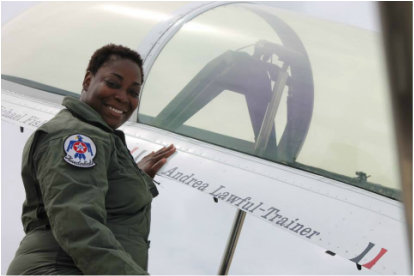
All I know, is that in my lifetime, the goal is to be the best Andrea I know how to be. To touch the lives that I can touch in ways small and large. And to leave here hoping that I made a difference. Period." 

I SEE YOUR FACEBOOK PAGE AND AM ALWAYS INTRIGUED BY YOUR POSTS, THE WORK YOU'RE DOING, BUT I MAY NOT ALWAYS UNDERSTAND HOW TO TAKE SOME THINGS YOU POST.
"Feel free to have the conversation. You can always inbox me and say, "what do you mean by that?" You know how many people inbox me? See, when we talk about it, then we can move on. We don't always have to agree. Doesn't mean that we don't still like each other. We just don't always have to agree."


0 Comments

The Power of Equality...  One Perspective

1/18/2015

0 Comments

 
This week we reached out to people of all colors, all races, all religions and genders to talk to them about equality. Are all people really created (and treated) equally? Their answers may surprise you. Being equal doesn’t mean that we must all be the same. While equality on the large scale means that we are all treated the same in the eyes of the law, with fairness and with faith, if we’re ever to truly bridge the gap of our differences, and live together as equals, maybe the time has come to stop trying to force everyone to fit into one box, to all be the same. Perhaps the time has come to embrace our differences and use them to build up instead of tear down, to unite rather than to divide... to unify.
We must learn to live together as brothers, or we will perish together as fools.~ Martin Luther King Jr. 

Picture
AS A WHITE MAN, THAT IS ALSO A RETIRED POLICE OFFICER, DO YOU FEEL RACISM IS STILL A PREDOMINANT ISSUE?
"I think the world has changed a great deal in my lifetime. Even more so than in your lifetime (early 40's). I think in my lifetime the world's gone through some very, very drastic and dramatic changes in the way of race relations. I can remember the world of the 1960's. I can remember what blacks and whites perceived themselves as in the 60's. There was a different feel in the 60's and even in the 70's. I think it was a period of time in America where young Americans of my generation, fooled themselves into believing that they were gonna make a drastic change in the world. In a lot of ways they did and in a lot of ways they didn't. And I think a lot of it's for the better and some of it is for the worse. There are forces working in this nation to constantly drive a wedge between whites, blacks, brown, Asians. etc. There's definitely a movement within this country that involves the media and the government, which actually works against race relations. And I think this President is a fine example of what you DON'T wanna do. I really thought that when Obama came in, he would be more of a calming force in American society. But I actually think he's a diversionary force. I think he's put more division between blacks and whites than any other president in office in the last 100 years."

WHAT MAKES YOU FEEL THAT WAY?
"Well, I feel a lot of times he's very biased, he makes a lot of biased statements. Sometimes he acts stupid, especially in regards to some of the things that went on this year in Ferguson and New York. I don't just lay it at his feet though. It isn't just him. It's bigger than him. A lot of what has to do with race relations in this country is being driven by the political parties in this country. Neither party is without sin. I don't like it. I think when you take political office, you should put your bias aside. Nobody can be totally bias free, but when you take office, you should try to put as much of your biased thinking to the side. Try to be as much middle of the road as possible, but without giving up your principles. If you believe in something strongly enough then please believe it, don't be wishy-washy, but at the same time, don't be so pig-headed that you can't come to a middle ground. That's what bothers me. 
On a personal level, I don't have a problem with race. I don't like all white people and I don't like all black people. At the same time, I like a lot of black people and I like a lot of white people. I have some really good friends that are white and some really good friends that are black. And I have some really good friends that are Hispanic and one or two friends that are Asian." 

YOU MENTIONED EARLIER THAT IN THE 60's, SOME CHANGES WERE GOOD AND SOME WEREN'T. CAN YOU ELABORATE ON THAT A BIT MORE?
"Here's some of the things that I don't think are good: in America, at the turn of the twentieth century, blacks were coming out of slavery. But, blacks were a group, just like every other minority group, every minority group that came into this country, through the American process. That includes a person like me. I'm an Italian that came to America. I CHOSE to be an American. Maybe I was young, but I had opportunities in my life and I didn't have to stay in America. When I was 18, I could've gone back to Italy. I was invited back to Italy by the Italian government (to join the Italian army). I was drafted into the Italian army. And (by not doing that) I had to give up returning to Italy or visiting Italy.  But I decided to give up my Italian citizenship and stay here in the states. I was always had full American citizenship though, because of my mother. At the turn of the century, all minority groups had gone through a phase where they kind of assimilated into society and blacks were also assimilating into society. Somewhere in the late sixties, with the death of Martin Luther King Jr., with the formation of the Black Panthers, with the radicalization of racism, not on the part of whites (there's always been part of whites that have been radicalized too. You know who I'm talking about... the guys who are burning crosses, wearing hoods and have little swastikas on their sleeves and shit. They're radical whites). But there's also radical blacks. There's Farrakhan, Jesse Jackson, Al Sharpton. In my opinion, they justify racism on the black part of America.  They're not doing anything for the betterment of society. They are driving wedges between groups of people. Another thing is, it's very difficult, whether you're black, white, purple, green, Martian, Venetian, Romulen or whatever, (I don't give a shit what the fuck you are), it's very hard to try try to stay positive- to try not to resent another group. Especially when groups become radicalized. Prime example is radical Islam. It's really hard for any human to try to be understanding of everybody's differences. This is the thing that I think happened in the sixties. Blacks were fed a line of crap by their own leaders to make them think that they would never be assimilated into America. Unfortunately I have bad news, they ARE going to be assimilated into America. The future of America is a homogenized group of people. They don't call this country a melting pot for no reason. I see it in the future. Unless there's an enormous effort made by individuals in this country that wanna keep us separated, America is gonna homogenize."


This week we reached out to people of all colors, all races, all religions and genders to talk to them about equality. Are all people really created (and treated) equally? Their answers may surprise you. Being equal doesn’t mean that we must all be the same. While equality on the large scale means that we are all treated the same in the eyes of the law, with fairness and with faith, if we’re ever to truly bridge the gap of our differences, and live together as equals, maybe the time has come to stop trying to force everyone to fit into one box, to all be the same. Perhaps the time has come to embrace our differences and use them to build up instead of tear down, to unite rather than to divide... to unify.
We must learn to live together as brothers, or we will perish together as fools.
~Martin Luther King Jr. 


SO YOU'RE SAYING WE SHOULD EMBRACE EACH OTHERS DIFFERENCES INSTEAD OF TRYING TO MAKE EVERYBODY THE SAME?
"Absolutely. There's nothing wrong with having some cultural differences. You celebrate Christmas a certain way, holidays a certain way, you have your own religious beliefs. But you really don't need behavior like what went on in Ferguson and New York over the sensationalism that's created by the media over an incident that you could calmly sit down and talk about. You know darn well that there's no policeman on this earth, and this is speaking from my experience in life, unless he's some kind of individual that has a mental problem, I've never met a policeman that's gotten ready for work, putting his equipment together to go out on patrol and said to himself "Hey, ya know what? I think I'm gonna go out and shoot some guy. I'm gonna go out and shoot some kid. I'm gonna shoot a black kid. I'm gonna shoot somebody just because I just feel like shooting them. Because I want my life to be totally discombobulated because of that act." Put yourself in the shoes of that officer that killed that kid (Michael) Brown. His life is done. His career is done. Right or wrong his (professional) life is done. He might as well go to Australia and become a sheep farmer. So do you think that guy consciously said to himself "I think I'm gonna shoot this kid"?" 

PLAYING DEVILS ADVOCATE, DO YOU THINK IT'S POSSIBLE THAT THERE COULD BE A SITUATION WHERE A POLICE OFFICER DOES ACT WITH MALICE AND FIGURES THEY CAN GET AWAY WITH IT?
"Here's what I think: a lot of people who have never walked the walk, who have never worked in law enforcement, their perception of what law enforcement is, is what they see on TV. And what they see on tv is excitement, excitement, excitement. There's no moment of doldrum on television police drama. Police work can be one of the most boring jobs you've ever had in your life. It can be so dull that it numbs your senses. If you think it's really exciting to be sitting there waiting for somebody to commit a crime, it isn't. There are nights where you're fighting to stay awake. And then, in a moment, a fraction of time, you go from personally nodding off to a point where your life is danger and you have to make a life or death decision in the fraction of a second. You go from absolute boredom to high intensity, reactive time. Most police officers, who I know that are good police officers (I always thought I was a good police officer), they temper themselves and their behavior. They try to be reasonable. Even at the height of an incident. They try to think clearly. But sometimes those decisions have to be made in micro seconds. In the case of Eric Gardner, I can tell you right now, that guy wasn't choked. You can't say "I can't breathe" if you can't breathe. If you're not getting any air, you can't speak. You distinctly hear that man saying "I can't breathe". He was overweight, laying on his chest with his hands behind his back and they had a hold of his neck. But there's an easy way to avoid all that: don't resist arrest. But the media turns it into a bigger deal by showing it over and over and over again. It was like Rodney King all over again. What people don't realize is that an incident like Rodney King cost close to 60 people their lives because the riots in L.A. caused a lot of people their lives. And who caused that? The media caused that. The constant airing of the officers hitting Rodney. But they don't show what happened before Rodney took the ass kicking that he took. They don't show what he did to get that ass kicking. They don't show him dropping his pants and mooning the female officer. You can't hear Rodney telling the officers to go fuck themselves. Rodney was no little boy, God rest his soul. But because of what the media did with his story, close to 60 people and untold billions of dollars were lost in Los Angeles. That's the ugly side of what America has become. All they're interested in is selling soap. And I have a problem with the media over that. 
Just like this incident in France. I have a problem with the way the media's portraying France. I hate to say this but, the French didn't lose almost 3,000 people. The United States did. They keep trying to water down the number of people that were killed on 9/11. But the fact of the matter is (almost) 3,000 people died that day. It's a big difference between 3,000 and 15. You didn't see the world come behind America and march down the street, a million and a half strong, did ya? A whole lot more lives were affected by that though. Another thing is that France has the largest population of Islamic people. They brought in those Islamic people for cheap labor. But then they force them to live in ghettos. They are ostracized by the majority of people in France. So that breeds bad feelings amongst these people and it breeds terrorists. Now I'm not justifying their actions, I'm just saying inequality, whether it's perceived or factual, is always gonna breed a negative response from those that feel they're not being treated fairly. The other thing is this: I would like the mayor of Paris to change the name of the street that they decided to name after Mumia Abu-Jamal, our famous police murderer of Philadelphia. He's a convicted police killer. He killed Danny Faulkner. Been convicted of it numerous times. He's exhausted all of his appeals. He's guilty. Yet, the French think of him as a political prisoner. At the same time, they want Americans to say "oh, look at what these Muslims did that killed these police officers." Yes, they killed police officers. The last time I checked Mumia is a Muslim name, yet they made him a political prisoner. But their Muslims are terrorists for killing their police officers. If you're gonna paint the wall with color, make sure there's an even coat all the way around. 
I have a friend that is very spiritual and very religious. So much so, aside from already being a deacon, he's completed his studies to where he can be considered a reverend. I stayed with him in September since I had a reunion to attend and I needed a place to stay and keep my bike. All we did was talk. We talk about this stuff all the time. He's a pretty even keeled individual but even he says it's very hard to turn an unbiased eye to the way that you feel. No matter how religious you might think you are. No matter how much you're trying to live the righteous life, on a personal level, it's very very hard to be unbiased. And I admire that cause it takes a lot to have the courage to say "I'm biased about certain things". He isn't blind to the fact that he's looking at things from a black perspective, and I'm looking at it from a white perspective. He's a devout democrat and I'm a devout republican. We are opposites, so there is no reason we should be sitting and breaking bread over a table talking and laughing and having a good time, should there? We see a lot of each other's points. Here's the interesting thing: he does not perceive you as right just because you are black and I don't perceive you as right just because you're white. That's the common view that him and I have: wrong is wrong and right is right. It is not right to deny somebody something just because of their religious beliefs, because of their racial background. What I feel America needs to do is understand that everyone is not going to agree with you. You are not constantly going to be able to preach to the choir. And there's no point in preaching to the choir cause there's no satisfaction in it. But you sure do hope that when you DO have a conversation with someone, that at least they're open minded enough that they don't shut you completely off."
Picture
0 Comments

Up in Smoke... When it Comes to Marijuana, They Just Have a Job to do.

1/17/2015

0 Comments

 
All this week we’ve been talking about the hot-button issue of marijuana legalization. If you missed any of our interviews  you can catch up on all of them on the blog. As of now, marijuana is fully legal to be purchased and smoked in only 4 states, Washington state, Colorado, Oregon, and Alaska. Washington DC’s legalization bid is currently stalled in Congress. In 23 other states, various forms decriminalization and medical usage laws exist. Decriminalization differs from legalization in that it eliminates the criminal penalties associated with marijuana posession. However, there are still lesser penalties such as fines often attached. For medical usage, in most instances a medical marijuana card must be obtained with the assistance of documentation provided by a certified primary care physician. Medical marijuana laws vary from state to state, with some making the process much more difficult than others. 
Many proponents remain unsatisfied. Many opponents continue to fight to preserve the laws in the remaining states, or even reverse the laws that have allowed marijuana to become legal (or nearly legal). At present under federal law, marijuana possession, usage, and sale is still illegal. However, the federal government has allowed provisions for the states to pass or enact their own laws for both medical and recreational use.
So, where do you stand? Are you in favor of  legalization and/or decriminalization? Do you think it is acceptable only in the cases of medical need? Or are you opposed to marijuana being readily available in all instances and situations? We spoke to a variety of people, with a variety of opinions, stories, and positions on the subject. Feel free to share your own thoughts and opinions. Remember you can alway comment anonymously. Check back every day for more and be sure to join this important conversation!


Picture
HOW DO YOU FEEL ABOUT THE POSSIBILITY OF LEGALIZING MARIJUANA?
"Well, on a personal level, I understand why it's beginning to be legalized in places, and it doesn't seem to be yielding any significant problems yet. But, for as long as remains against the law, it's my job to oppose sales, transportation, production and yeah even usage of it."

WHAT IS YOUR JOB?
"I'm a cop."

SO IT IS QUTE LITERALLY YOUR JOB TO MAKE SURE PEOPLE ARE NOT SMOKING POT?
"Yeah."

DO YOU SPEND A LOT OF TIME ON THAT PARTICULAR ASPECT OF YOUR CAREER?
"On keeping people from smoking pot? No. I mean I am not going out looking to arrest people who are smoking pot. Unfortunately, if I happen to come acrosss it, I have to deal with it. If you're growing it, selling it, whatever, I have no choice but to do my job."

YOU SAID YOU UNDERSTAND WHY IT'S BEING LEGALIZED IN PLACES, IF YOU WERE NOT A POLICE OFFICER DO YOU THINK YOU'D STILL HAVE ISSUES WITH IT? 
"I know people who smoke pot. And I am sure people that I don't even know about smoke too. Society is not a bubble. I don't think of these people in any certain kind of way because they may smoke. Other than the fact that they're doing something against the law, I don't really think what they are doing is morally wrong or anything."

WHAT ABOUT OTHER OFFICERS, DO YOU SEE A LOT OF RESISTANCE TO LEGALIZING?
"Actually no. I mean yeah there are some guys who will just never come around to it. They're just too old school. But you see a lot of the guys just trying to do their job. You know on the inside they might think 'this is such a waste of time to be busting a bunch of guys sitting in a car smoking a joint.' Even some of the older guys who've been on the job a long time don't think it's a big deal at all. I mean, these guys have seen shit that is so much worse then a bunch of kids getting stoned at a park or whatever."

WOULD ANY OF THEM EVER SPEAK OUT IN FAVOR OF LEGALIZING?
"I have no idea. I mean, it's their job so I'd think probably no. I've seen a few ex cops come out and talk about stuff that they felt was wrong from a legal standpoint, but I don't think that happens to much. You have to respect the law. You have to respect the badge, the uniform, your brothers, you maybe not agree with everything, but you have a job to do, a responsibility. I mean there are all kinds of crazy laws in the world. I think in like Kentucky or Alabama or somewhere down south it is legal to marry your horse (laughter). Do I think that is normal? No. I think it's a lot crazier to marry a horse than it is to smoke some pot, but it's legal, so that's it. If you marry your horse, I'm not gonna arrest you. If you light up a joint in the middle of Taco Bell, I am. I have to."

WHAT ABOUT MEDICAL MARIJUANA?
"That's another story. I mean legally speaking. There are all sorts of regulations that vary by state as far as what you are allowed to do, where you can get it, what the procedure is, what the approved conditions are, it just goes on."
BUT YOU SUPPORT THAT?
"I do. I don't know very many people who are against it. I mean, I know they are out there. But if a doctor says it will help a particular illness or disease and the research supports that, I think it's pretty cruel actually to withhold it. They don't withhold other kinds of drugs. Look at pain medication. They give that out freely and it's perfectly legal and I have arrested a lot more people in the past 2, 3 years for stuff related to abuse, sales, theft and stuff, all of Oxys and Percocets and prescription meds. People will steal from their own mom to get Oxys, they'll sell their wedding ring, they'll pull a gun on someone. Doesn't really happen that way with pot."

Picture
WHAT DOES HAPPEN WITH POT? SPEAKING ABOUT CASES, ARRESTS?
"Possession mainly- someone with pot on them. You get intent, I mean people who are selling it, or who are planning to sell it, but nothing crazy. You catch people smoking it. You might be working on a case where someone is dealing it in larger amounts. You're not responding to a pot-created hostage situation. I mean unless someone is holding the last pack of Twinkies hostage (laughter)."

SO IF IT BECOMES LEGAL, YOU'RE OKAY WITH THAT?
"If it becomes legal, I'll do what I have always done. The only thing it changes for me, is who I need to be focusing my attention on."

DO YOU THINK THAT, AS SOME HAVE SAID, LEGALIZING MARIJUANA WILL ACTUALLY HELP THE POLICE?
"I've heard that, of course. I mean the arguments that it will free up some time, some manpower, the resources spent on dealing with marijuana arrests, trials, incarcerations, etc. I'd imagine it's true to a degree. But, that's the case if you take any law off the books that has a significant amount of arrests annually or however they want to group it. I don't spend a lot of time working on cases like that, but I guess. I can see it more on a federal level, people who are in prison for it. I don't know what the statistics are, or how many people are taking up prison space for pot charges, but I have heard the arguments that it would free up prison space and court time."

LASTLY, IF IT'S LEGAL, WILL YOU SMOKE IT?
"No. Not my thing. I didn't even really smoke it when I was a kid and all my friends were. I was, and I am, a beer guy. Give me a beer and I am good. And yeah I know that alcohol is harmful an a lot of people say more so than pot. It may be true. Pot just isn't my choice. I'll take my chances with a few beers. it's not the legal thing. Well it is, but it's not. It'd be that way anyway. The only difference for me, like I said, is who I have to be taking in." 

0 Comments

Up in Smoke... Just Say No!

1/16/2015

0 Comments

 
This week we’re talking about the hot button issue of marijuana legalization. As of now, marijuana is fully legal to be purchased and smoked in only 4 states, Washington state, Colorado, Oregon, and Alaska. Washington DC’s legalization bid is currently stalled in Congress. In 23 other states, various forms of decriminalization and medical usage laws exist. Decriminalization differs from legalization in that it eliminates the criminal penalties associated with marijuana posession. However, there are still lesser penalties such as fines often attached. For medical usage, in most instances a medical marijuana card must be obtained with the assistance of documentation by a certified primary care physician. Medical marijuana laws vary from state to state, with some making the process much more difficult than others.
Many proponents remain unsatisfied. Many opponents continue to fight to preserve the laws in the remaining states, or even reverse the laws that have allowed marijuana to become legal (or nearly legal). At present under federal law, marijuana possession, usage, and sale is still illegal. However, the federal government has allowed provisions for the states to pass or enact their own laws for both medical and recreational use.
So, where do you stand? Are you in favor of the legalization and/or decriminalization? Do you think it is acceptable only in the cases of medical need? Or are you opposed to marijuana being readily available in all instances and situations? We spoke to a variety of people, with a variety of opinions, stories, and positions on the subject. Feel free to share your own thoughts and opinions. Remember you can alway comment anonymously. Check back every day for more and be sure to join this important conversation!
Picture
DO YOU FEEL MARIJUANA SHOULD BE LEGALIZED?
"No, I don't." 

WHY DO YOU FEEL THAT WAY?
"I'm a senior citizen now, but growing up it wasn't important to us. My group of friends and my school friends, that was something that you just didn't do because you didn't need to do that. I see what goes on, on the news and in newspapers, most of these robberies are committed by people that are on drugs and whacked out. I just feel that it messes up your brain and your way of thinking. I don't see any good in it. If you live a good life and are around good people, you don't need that, so called, high. I'm just very much against it. When my state (Florida) voted for it, I voted no, as did most of the state. Of course I live in a senior citizen state, so to speak. I'm just happy being alive and who I am. Once in a while I may have a drink. I think even the smoking aspect of it, though they don't say much about cancer smoking, but there's second hand smoke. I just don't get it, why they'd legalize it. I only think it makes matters worse. When I look at what's going on in Denver, the people that are selling it are making absolute millions of dollars. People are coming in from all states. I feel that you should have to be a resident of Denver, for at least six months or more. Not just come across the border just so you can get a joint and have a good time. One thing my husband and I, and our friends, were just never into. I don't understand why people today have to smoke that. And I think it's addicting, once you start, I don't foresee a future without it." 

HAVE YOU EVER TRIED IT?
"No. Never. It was something, when we went to school, you just didn't think of. It wasn't as prevalent as it is today. It's something I just never would've given a thought to."

WHAT IF SOMEBODY TOLD YOU IT WAS LESS HARMFUL THAN ALCOHOL?
"I probably wouldn't be interested in it. I'm high on everyday living, being with my friends and knowing that I get up and I'm out. I have a wonderful group of friends and support system. I think for people that are severely ill and a doctor would order that, prescription only, I could see that. But just to smoke it, as kids would say, I just don't get it. I think they look like a bunch of nuts when I see it on television. And now they say these hookah pipes are just as addictive. And I don't know if they cause cancer. As far as social, I mean you're going out to have a good time anyhow, being social with people that you like anyway, why would you need that?" 

0 Comments

Up in Smoke... Make Marijuana Legal, But be Considerate About it, Please.

1/16/2015

2 Comments

 
This week we’re talking about the hot-button issue of marijuana legalization. As of now, marijuana is fully legal to be purchased and smoked in only 4 states, Washington state, Colorado, Oregon, and Alaska. Washington DC’s legalization bid is currently stalled in Congress. In 23 other states, various forms decriminalization and medical usage laws exist. Decriminalization differs from legalization in that it eliminates the criminal penalties associated with marijuana posession. However, there are still lesser penalties such as fines often attached. For medical usage, in most instances a medical marijuana card must be obtained with the assistance of documentation provided by a certified primary care physician. Medical marijuana laws vary from state to state, with some making the process much more difficult than others. 
Many proponents remain unsatisfied. Many opponents continue to fight to preserve the laws in the remaining states, or even reverse the laws that have allowed marijuana to become legal (or nearly legal). At present under federal law, marijuana possession, usage, and sale is still illegal. However, the federal government has allowed provisions for the states to pass or enact their own laws for both medical and recreational use.
So, where do you stand? Are you in favor of  legalization and/or decriminalization? Do you think it is acceptable only in the cases of medical need? Or are you opposed to marijuana being readily available in all instances and situations? We spoke to a variety of people, with a variety of opinions, stories, and positions on the subject. Feel free to share your own thoughts and opinions. Remember you can alway comment anonymously. Check back every day for more and be sure to join this important conversation!

Picture
WHAT IS YOUR STANDPOINT ON LEGALIZATION OF MARIJUANA?
"Being someone that doesn't use pot, I don't have a strong opinion about it one way or another. But if asked the question, my feeling is that I don't have a problem with it being legalized. I consider it to be a drug equivalent to alcohol. Since I enjoy having a drink, I think people probably enjoy smoking pot in the way I enjoy having a drink. I think it would be hypocritical to be against it. A lot of time, energy, money and police hours are spent in apprehending people and going through the courts and what have you, could be better spent in other places. I equate it to the era of prohibition." 

DID YOU ALWAYS FEEL THIS WAY?
"I think in the past, if I think about it, I probably was against the legalization of pot just because you grew up in a society that said pot was bad. That mentality kind of ingrains itself in your head. People are always resistant to change so the thought of changing it, to me, probably my initial knee- jerk reaction would've been like "no!" about ten years ago. But I'm sure people felt that way about reversing prohibition. You grow up thinking if the law says it's bad, it's bad.
Not having a medical background, I can't say that I'm in any way an expert about whether or not it's worse for the body than alcohol. I'm assuming that it's not doing more damage to someone's brain than alcohol does. I guess I'd have to look more into that. It's not something that I'm gonna be doing though. But if medical research showed that it was worse for you than maybe I'd have a different opinion. I do think you should have to be over 21, just like with alcohol." 

THAT'S INTERESTING, BECAUSE SOME PEOPLE WE SPOKE TO THIS WEEK SAID HOW PEOPLE JUDGE AND STEREOTYPE PEOPLE THAT SMOKE POT. LIKE ALL THEY DO IS SIT ON THE COUCH EATING CHEETOS.
"Do I think that if you just smoked a joint, you might be more relaxed, sitting on the couch, eating Cheetos? Yeah, you might be, but it's the same as after you've had one or two drinks after dinner. So, it's kind of the same."

I UNDERSTAND THERE'S A COMPONENT THAT YOU DON'T LIKE?
"I'm not anti-pot, but I am anti-second hand smoke. I wish we could outlaw smoking in every form whether it be cigarettes or pot. Because I'm not a smoker, and if I'm sitting next to you at a table having a drink, as long as I don't get behind the wheel of a car, nothing I'm doing about having that drink is affecting you. But if I'm sitting at a table next to you smoking a cigarette or a joint, my second hand smoke is infringing upon you. I worry about that. I worry that if it becomes legal to smoke it (pot), that'll be just one more thing I have to walk through at the entrance of a mall that I don't wanna walk through. 
What worries me too, is I have so many people, through work, I have to do deal with that I can smell second hand smoke all the time because they're smoking in their cars or a home environment that has it. So I worry, that if it becomes legalized, what happens if people do it around their kids- smoking it. Any other form, I don't really have an issue with except your normal issues like don't put it in a brownie and then drive your kid, obviously. But I worry about people smoking it around their kids. Because not only would that be second hand smoke getting into the child's system, but also a drug. I hope people would be smart. I have absolutely no issues with medicinal purposes of it though. It's the same as any other legal drug that's prescribed to help with pain. That's a no brainer. If it's causing somebody to not be in pain, then they should have it."

Picture
CERTAINLY, WHETHER IT BECOMES LEGAL OR NOT, ONE WOULD HOPE PEOPLE USE GOOD JUDGEMENT BY NOT EXPOSING THEIR KIDS TO SECOND HAND SMOKE OF ANY KIND. IT CAN LEAD TO ALL SORTS OF HEALTH ISSUES. 
"I get a cold, and I get over it. But when my husband gets a cold, it's so much worse. And I'm quite sure that because he grew up in the 70's and his parents were both chain smokers, so for the first 23 years of his life, he was in a house, that at all times, 24/7, had second hand smoke, a lot of it. He's never been a smoker, but (it's like) he was a smoker for 23 years. But that was the 70's. In the 50's everybody actually thought they (cigarettes) were good for you. I remember my mother telling me that her father, who died of a heart attack eventually, had three (heart attacks) before he died. He stopped smoking one year and was irritable, the way someone quitting can get, and the doctor said to him "you have to smoke. It calms your nerves. It's not good for you to not smoke. You're hurting your body." This was the 40's or 50's. They truly believed that. Then it moved to the 70's, where the drug companies knew it was bad for you but they were lying. Now, everybody knows the truth and that's good. But I do think there's damage to his lungs from growing up in a house where two people chain smoked. You don't know cause there was no before and after study done, but it just makes sense to me, that there are people in life that have more respiratory or have more trouble getting over colds or get bronchitis every year while other people don't. I think if you look back, that could be one of the reasons. 
Every parent loves their child. They don't purposely hurt their child. They just get lazy as humans, it's cold outside, this or that. You see a carseat in a car, then you see a cigarette getting flicked out the window and you're like "Did you really think the fact that you cracked your window was gonna solve that problem? Cause it didn't." 
A kid doesn't go to school cause they were at the ER getting a breathing treatment, but their folder smells like cigarette smoke. 
They (parents) don't equate it to like taking a belt to their kid, because they're not doing it in anger, but it's still abusive."

2 Comments

Up in Smoke... Are Teens Getting 'Schooled' on the Dangers of Marijuana?

1/15/2015

0 Comments

 
This week we’re talking about the hot-button issue of marijuana legalization. As of now, marijuana is fully legal to be purchased and smoked in only 4 states, Washington state, Colorado, Oregon, and Alaska. Washington DC’s legalization bid is currently stalled in Congress. In 23 other states, various forms of decriminalization and medical usage laws exist. Decriminalization differs from legalization in that it eliminates the criminal penalties associated with marijuana posession. However, there are still lesser penalties such as fines often attached. For medical usage, in most instances a medical marijuana card must be obtained with the assistance of documentation from a certified primary care physician. Medical marijuana laws vary from state to state, with some making the process much more difficult than others. 
Many proponents remain unsatisfied. Many opponents continue to fight to preserve the laws in the remaining states, or even reverse the laws that have allowed marijuana to become legal (or nearly legal). At present under federal law, marijuana possession, usage, and sale is still illegal. However, the federal government has allowed provisions for the states to pass or enact their own laws for both medical and recreational use. 

So, where do you stand? Are you in favor of the legalization and/or decriminalization? Do you think it is acceptable only in the cases of medical need? Or are you opposed to marijuana being readily available in all instances and situations? We spoke to a variety of people, with a variety of opinions, stories, and positions on the subject. Feel free to share your own thoughts and opinions. Remember you can alway comment anonymously. Check back every day for more and be sure to join this important conversation!
Picture
YOU'RE A SENIOR IN HIGH SCHOOL IS THAT RIGHT?
"Correct."

HOW DO YOU FEEL ABOUT THE POSSIBILITY OF MARIJUANA BEING LEGALIZED?
"Marijuana is everywhere now. I think the biggest concern is that it will be a gateway drug. But I feel like if marijuana is easier to come by, most people will just stick to that rather than try to take the extra risk of trying harder, illegal drugs. I think the main fear people have with marijuana is getting caught with it. Tobacco is legal, which you could argue is worse for you. With alcohol you hear about drunk driving, you hear about people getting drunk and getting in bar fights, you never hear about that stuff with marijuana." 

WHEN I WAS A KID NOT MANY PEOPLE EVER TALKED ABOUT LEGALIZING POT. NOW IT'S A HUGE ISSUE. DO YOU THINK THAT PEOPLE YOUR AGE VIEW POT AS SOMETHING THAT IS LESS DANGEROUS, LES ADDICTIVE THAN WE WERE TAUGHT IT WAS WHEN I WAS YOUNGER?
"Oh definitely. I mean pot has become more powerful. The levels of THC in the drug have gone up. There's more potent stuff. But it's not really seen as something "addictive". Not like tobacco or whatever. You don't think you're going to have a dependence on it. People just look at it as something fun, something you might do from time to time without the risk of getting addicted. And if it's legal, that's just one less thing you'll be worried about."

WHAT DO THEY TEACH YOU IN SCHOOL ABOUT MARIJUANA?
"Honestly, they don't talk much about marijuana as a singularity. We used to talk mostly about 'drugs', as a whole. They'd classify them as stimulants or depressants or whatever, but we don't really learn much about it alone. There's a big pot presence in high schools already. Maybe they think if they just ignore it it will go away."
 
WE USED TO HAVE TO WATCH ALL THESE ANTI-DRUG VIDEOS THAT REALLY DEMONIZED DRUG USE, PARTICULARLY MARIJUANA. HAVE YOU SEEN ANYTHING LIKE THIS? 
"In middle school we had a whole program where it started out where we learned about what would happen to you if you did this, or this or this. Marijuana was like the starting point. If you do that, then you might do this. You might try cocaine, or meth, or heroin, and how it all falls out from there."

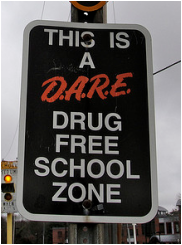
WAS THAT THE D.A.R.E PROGRAM?
"That was the D.A.R.E. program, yes." 

I REALIZE YOU WERE MUCH YOUNGER BUT WHEN YOU COMPLETED THE PROGRAM, DID YOU FEEL A SENSE OF FEAR ABOUT WHAT MIGHT HAPPEN TO YOU IF TRIED ANY DRUGS? 
"I didn't really feel a sense of fear. But as far as marijuana goes, some things didn't add up. I mean, just from knowing people who had smoked pot I knew that just by smoking pot one time, you're not going to die, you're not going to become addicted to drugs."

THAT GOES ALONG WITH WHAT YOU HAD SAID EARLIER ABOUT ONE FEAR OF LEGALIZING BEING THAT POT IS A GATEWAY DRUG. DO YOU THINK OF MARIJUANA AS A GATEWAY DRUG?
"That's a big issue with marijuana. I really think on its own it is relatively harmless. I don't think it really does too much negatively health wise. But the fear is that if people do one thing, they want more of that thing, and then they are going to want something else, something more, and then another and another."

SO DO YOU THINK THE GATEWAY DRUG ISSUE IS MORE ABOUT THE PHYSICAL ADDICTION TO MARIJUANA OR THE SOCIAL IMPLICATIONS- IF YOU'RE OUT SMOKING POT, YOU'RE MORE LIKELY TO BE IN SITUATIONS WHERE YOU MAY MOVE ON TO TRYING OTHER THINGS TOO?
"Yeah because if say someone offers you heroin or another hard drug right off the bat you're not going to do it because you know how harmful it is. I mean most people won't. But if you start off smoking pot, I can see how smoking pot might ease that transition a little bit. I mean even then it's still a huge jump to some hard chemically synthesized drugs from something that basically grows right out of the ground."

(REALIZING THAT YOU WOULD STILL HAVE TO WAIT UNTIL YOU WERE 21 TO SMOKE LEGALLY) DO YOU THINK THAT IF IT WERE COMPLETELY LEGAL IT WOULD MAKE YOU, OR SAY YOUR FRIENDS OR YOUR PEERS MORE LIKELY TO TRY IT OR USE IT? 
"Oh definitely. I mean, I don't want to say because there are no repercussions, but it's definitely less fear there. I mean there's still the standpoint that it is a drug, and so it can still be harmful for you, but if it is legal, yeah, in my opinion it will definitely make people more open to it."

SO WOULD YOU SAY IN YOUR OPINION IT IS MORE THE FEAR OF LEGAL OR PARENTAL REPRECUSSIONS THAT KEEP YOUNG PEOPLE FROM DOING IT RATHER THAN THE FEAR OF WHAT THE DRUG MIGHT ACTUALLY DO TO YOU?
"Oh, yeah. By far yeah."

GIVEN THAT YOU ARE STILL LIVING AT HOME, DO YOU THINK IF IT WERE LEGAL YOUR PARENTS WOULD STILL HAVE A BIG ISSUE WITH YOU USING IT?
"Definitely. Because, as I said before, it is still drugs. I mean you're inhaling some kind of toxins into your body if nothing else. And I think it can be seen as leading to laziness. And since this is such a critical point in my life, I think it could be seen as a 'motivational hazard'."  

AS SOMEONE WHO WILL SOON BE VOTING FOR THE FIRST TIME, WOULD A CANDIDATE THAT WAS PRO-LEGALIZATION OF MARIJUANA HAVE ANY KIND OF ADVANTAGE IN GARNERING YOUR VOTE?
"Probably. I think most people would like to avoid having any possible run-ins with the police if possible. And should anyone be caught for this, it could later come back to haunt you. And for what? I wouldn't want to feel the wrath of the police for that. I just think that (by legalizing) eliminating the risk of being caught and getting in trouble for something like that would be beneficial for all of us."

Picture
Picture
Picture
0 Comments

Up in Smoke... The Good Outweighs the Bad When it Comes to Legalizing Marijuana.

1/14/2015

1 Comment

 
This week we’re talking about the hot button issue of marijuana legalization. As of now, marijuana is fully legal to be purchased and smoked in only 4 states, Washington state, Colorado, Oregon, and Alaska. Washington DC’s legalization bid is currently stalled in Congress. In 23 other states, various forms of decriminalization and medical usage laws exist. Decriminalization differs from legalization in that it eliminates the criminal penalties associated with marijuana posession. However, there are still lesser penalties such as fines often attached. For medical usage, in most instances a medical marijuana card must be obtained with the assistance of documentation by a certified primary care physician. Medical marijuana laws vary from state to state, with some making the process much more difficult than others.
Many proponents remain unsatisfied. Many opponents continue to fight to preserve the laws in the remaining states, or even reverse the laws that have allowed marijuana to become legal (or nearly legal). At present under federal law, marijuana possession, usage, and sale is still illegal. However, the federal government has allowed provisions for the states to pass or enact their own laws for both medical and recreational use.
So, where do you stand? Are you in favor of the legalization and/or decriminalization? Do you think it is acceptable only in the cases of medical need? Or are you opposed to marijuana being readily available in all instances and situations? We spoke to a variety of people, with a variety of opinions, stories, and positions on the subject. Feel free to share your own thoughts and opinions. Remember you can alway comment anonymously. Check back every day for more and be sure to join this important conversation!
Picture
WHAT IS YOUR STANDPOINT ON LEGALIZATION OF MARIJUANA?
"I don't think it's a harmful drug. I think there are more benefits to people using it as a recreational drug than people using such things as alcohol or harder drugs. I think there are some people in our society that may benefit from the drug itself. Pot doesn't usually turn people into criminals. I think legalizing for tax purposes would be a better reason, in my opinion, than not legalizing it because they say it's a harmful or bad for society to use, recreationally." 

SO YOU'RE PRO LEGALIZATION FOR RECREATIONAL USE?
"It does benefit people medicinally too. People having problems with eating, cancer, depression, trouble sleeping. It's been proven, as I've seen on the news, to help children that have diseases that we never even knew that (pot) would be an approach. These parents that have kids taking lots of prescribed drugs, legally by doctors, that didn't seem to work. I don't know how the parents wound up coming up with the idea to let their kids smoke marijuana, but it's proven to the parents, the kids ultimate protector, that it's helped medicinally."

WHY DO YOU FEEL IT'S SAFE TO LEGALIZE?
"I think it would stop people from going into bad neighborhoods to obtain it. I think it would be monitored so it doesn't get laced with other drugs."

THAT BEING SAID, SOME PEOPLE MAY ARGUE THAT PEOPLE GO INTO BAD NEIGHBORHOODS TO GET HARDER DRUGS TOO. DOES THAT MEAN WE SHOULD LEGALIZE THAT TOO? WHAT WOULD YOUR RESPONSE BE TO THAT?
"I guess the classification of drug that it is. Some are addicting, cause hallucinations, cause you to act in different ways and are a lot more dangerous. They are proven to be more addictive. I'm not saying marijuana is safe, I don't think it's a "safe" drug, but compared to heroin and cocaine and methamphetamines and even pain killers that are so rampant in our world. You don't just sit and smoke joint after joint after joint. When people are doing lines of coke, they're doing it for four and five days straight with no sleep, they don't eat. Their health goes down. Pot isn't a drug that takes your body over. If you let it, become a heavy user, then you could be classified as a "pothead" which is known as a lazy person. Someone that doesn't have any drive or things like that but it's not gonna cause you to steal or lose your family if you smoke weed. It's not gonna cause you to do illegal acts cause it's such an addicting drug (coke, etc.) versus marijuana." 

Picture
YOU SAID YOU DIDN'T THINK MARIJUANA WAS HARMLESS THOUGH. WHAT DO YOU THINK THE HARM IS? 
"I guess just the fact that it's a drug. It's like Cardiozem, a heart drug medication. I don't think that's safe. (It's just the first one that came to my head). It monitors people with atrial fibrillation and it's unsafe. I know it sounds contradictory. It's not that I don't know that I'm putting some type of toxin in my body. It's smoke. It's as if I'm driving behind a tractor trailer that has all that carbon dioxide coming out of it's exhaust. It's unhealthy to be taking in the oxygen I'm taking in. I know it's not a "good thing". I've never had any health issues from it. I've never gotten myself into any situation where I was needing it, looking for it, where I had to do things that were not "human like" to get them, compromise my family by doing this drug. But, it's still a drug. It's something entering your body that isn't purely clean. It's still a toxin and from what I've read, a harmful toxin. I just don't have side effects or feel I've acted different, outside of myself, by doing the drug." 

WHEN WAS THE FIRST TIME YOU SMOKED?
"I was probably between 12 and 14. I'm leaning more towards 12." 

WHAT MADE YOU DO IT FOR THE FIRST TIME?
"Probably because I wasn't supposed to be. What are you gonna do when mom tells you "get away from him?" Follow him outside and smoke with him. I was curious. Just being a kid. I remember it like it was yesterday. They were all doing it, my brothers and neighbors; (they) were doing it so it couldn't be that bad. At 12 I don't think I really knew what a drug was." 

HAVE YOU EVER EXPERIMENTED WITH DRUGS OTHER THAN POT?
"Yeah." 

DO YOU THINK YOU WERE COMFORTABLE TRYING THE OTHER DRUGS BECAUSE YOU HAD SMOKED POT AND THAT WAS FINE?
"I never felt comfortable doing the other drugs. I don't really know why I tried the other ones, to tell you the truth. It was definitely addictive, but not hard to stop. But pot definitely didn't lead me into doing the other drugs. I tried those like 12, 13, 14 years after I tried pot, so it wasn't that it was a gateway. That was a different time in my life, many many years later. Probably just offered to me at the right time. I don't know why I wasn't scared. I was at an age that I could afford it. I hung with different people. I needed to work different hours and was in school. Now, they tell you to drink a Monster or a Red Bull (to keep those hours)."

WHAT DO YOU ENJOY ABOUT POT? WHAT DOES IT DO FOR YOU?
"Relaxes your mind. I sleep better. Sometimes, often, it's a social thing. Many of my friends "participate". You gravitate towards those people, even in a dating world. I don't think people that smoke pot are mean. Most of them are kind people, chilled out people. They don't wanna go out and party and have a raucous kind of time. I don't drink, take medications, any other drugs at all. You know how someone will say they just need a nice cold beer? I enjoy a joint. And if it helps me sleep a little bit and clears my mind, that's extra. Mostly it's social." 

AS A PARENT, HOW WOULD YOU FEEL IF YOUR KID STARTED SMOKING POT?
"I know he's tried it and didn't like it and that made me happy, that he didn't like it. But if he decided that that was something that he wanted to partake in, I would hope that he would be honest enough to tell me the truth about it all so I would be able to support his idea behind why he was doing it. If it was a decent enough reason, I guess I would try to stick behind him and support him. I would not be happy about it." 

IF YOU THINK IT SHOULD BE LEGALIZED, WHY WOULD YOU NOT BE HAPPY ABOUT HIS DECISION TO DO IT?
"It's still a drug. To tell you the truth, it's a lot that people just look down on it. You can go to a bar and leave after spending $400 and nobody will say anything to you the next day. But if you found out someone smoked a joint the night before, you're a pothead, a loser. Because it's been illegal so long, it has a stigma about it. I wouldn't want him to feel disappointed in himself doing that drug, though he's raised in a different world where there's talk about it being legalized. When I heard he tried it, there was nothing I could say. He's seen it in his family. I'm obviously not against it, but I can't say I think the world should do it. I have a mother with cancer, and I don't know if it would help her, but I would like her to try, but I'd never say "do it". Same reasons why I'm on the fence with myself doing it. Physically, health wise it could come back and be harmful to you. Everybody's different and some people see it as a gateway drug and I'd be a little nervous about that with him. Maybe I'd be nervous about the reason he decided to start. If he was trying to fill in a void of another problem he was having. Other than that, I'd like to know that he was, because then I'd know he wasn't hiding it from me. I wouldn't try to stop him. I'd just try to educate him on it." 

DOES HE KNOW THAT YOU SMOKE?
"Yes. It was in a horrible fashion and we had a really long talk about it. He told me he knew already, since he was young."

HOW DID HE FEEL ABOUT IT?
"He took it a lot better than I thought. He was raised in a world where it's very normal. He wasn't happy that it was his mom though. But he did say that he wouldn't try to ask me to stop. He asked for it to not be in the house and that it was my decision. I know that he's not happy about it but I don't think he looks at me any differently because of it." 

DID YOU HAVE THAT "TALK" WITH HIM ABOUT DRUGS? AND HOW OLD WAS HE?
"Yes. Probably about 15-16. As his parent, I probably talked to him so late because it is such a frowned upon drug and the stigma, the adjectives and definitions that go next to pot aren't good. I never really wanted to have that talk with him probably because I was afraid he'd be ashamed that I was a partaker and I didn't want him to be ashamed of his mother. You know what they're taught and I didn't want him to know it was in the house. That's why I waited so long and it came up at a really bad time. But now he'll talk to me about it and tells me stuff, more than I'd like to know. Not about me, but about what they learned. He knows. He has a brother (different mother) that partakes and he is a bit of a loser and he blames a lot of it on the pot smoking. He tried to compare us both when I was out of work and he stopped real quick. Even though I've paid my mortgage myself for years and years. Pot doesn't make everyone that lazy, non working, strung out, laying on the couch eating, type of person. That's what I thought he was gonna think of me cause that's what he saw in his brother. So when he compared us, I had to make him know that not everybody's like that. I think that's why I tried to hide it. I wanted the chance to redeem who I've been his whole life without him knowing I smoked. A recent talk had happened regarding his brother and the pot smoking because I smelled it in the house. I was very unhappy. He turned to me and said "look who's talking" and I did have to stick up for myself and say "I never did it in front of you." I never put him in that predicament where it was accessible or in view. I'm not an irresponsible drug addict. And I think that's the reason why I don't want him to do it himself. I don't want him to be afraid that that's what people are gonna think of him. Though I'm big on worrying about what people think of me. It's not good.
We were driving yesterday. We came onto the topic about how people judge and worry about what other people think of them. He said to me, pointing to a random car, "Mom, I think you would care if that person thought that you should be wearing those sneakerss." I know I worry about what people think about me a lot, but that's how I was raised, even about weed. People don't give you a proper trial. They look at, let's say, heroin addicts as a lost cause. I've dealt with many addicts and they're not bad people. There just on a different path I guess. I don't know. But marijuana is not a drug where it's going to hypnotize you for days on end thinking there's another world. I think people look at pot users as a lost cause too, expecting they'll now do heroine or something. 
Again, I don't think pot is so bad, but I don't like people to know that I smoke it, probably because of the stigma my parents thought about it. They were born in the 30's, my brothers in the 60's, I'm the last kid ('72). It was such a big deal in my house and to this day, I believe that if it wasn't made out to be such a big deal, I might not have smoked it. I don't know. Who knows, I might have gotten bored with it. I still hear about it, at this age, the negative comments. A lot of things we do to ourselves is our own battles in our brains."

WHAT WOULD YOUR ARGUMENT BE TO LEGALIZE IT?
"That it's not a dangerous drug. It doesn't lead people to do things that could cause them to lose their lives. I just don't think it's that class of a drug to be against the law. I think if everyone tried it, they wouldn't be so afraid of it and it would be a kinder world." 


1 Comment

Up in Smoke... A Parents Perspective on Pot.

1/13/2015

1 Comment

 
This week we've been talking about the issue of marijuana legalization. As of now, marijuana is fully legal to be purchased and smoked in only 4 states, Washington state, Colorado, Oregon, and Alaska. Washington DC’s legalization bid is currently stalled in Congress. In 23 other states, various forms of decriminalization and medical usage laws exist. Decriminalization differs from legalization in that it eliminates the criminal penalties associated with marijuana possession. However, there are still lesser penalties such as fines often attached. For medical usage, in most instances a medical marijuana card must be obtained with the assistance of documentation by a certified primary care physician. Medical marijuana laws vary from state to state, with some making the process much more difficult than others.
Many proponents remain unsatisfied. Many opponents continue to fight to preserve the laws in the remaining states, or even reverse the laws that have allowed marijuana to become legal (or nearly legal). At present under federal law, marijuana possession, usage, and sale is still illegal. However, the federal government has allowed provisions for the states to pass or enact their own laws for both medical and recreational use.

So, where do you stand? Are you in favor of the legalization and/or decriminalization? Do you think it is acceptable only in the cases of medical need? Or are you opposed to marijuana being readily available in all instances and situations? We spoke to a variety of people, with a variety of opinions, stories, and positions on the subject. Feel free to share your own thoughts and opinions. Remember you can alway comment anonymously. Check back every day for more and be sure to join this important conversation!
*If you missed them, be sure to check out the previous two interviews on this subject*
Picture
WHAT IS YOUR STANDPOINT ON LEGALIZATION OF MARIJUANA?
"I'm all for it. But, with certain restrictions like what we have with alcohol. In fact, I think we should ban alcohol cause I think that's way more dangerous. But I digress. Restrictions like you can't drive impaired. Obviously when you use, you become impaired. You may be having a great time like you do when you're drinking but you should know your limit and not get in a car and endanger other people's lives." 

WHY DO YOU FEEL IT SHOULD BE LEGALIZED?
"For me, and I'm not gonna lie and say I don't like doing it just to do it, cause I do. But I also have a lot of physical issues from a car accident and as I've gotten older and heavier, the issues have become more complicated and cause me more pain and discomfort. A lot of the time, mostly every day, the medicine doesn't always work. Being able to take a couple hits here or there, smoke a joint, bowl, whatever, actually helps. It makes the medicine work a little bit better, kicks it in a little better. So I have that reason as well as just enjoying it." 

HOW DO YOU FEEL ABOUT LEGALIZATION, FROM THE VIEWPOINT OF A PARENT?
"Fortunately for me, my sons are 25 and 21. They're both old enough to make their own decisions. My younger son has never touched it and is not interested in any way, shape or form. My older son was very interested. He isn't doing it now (for personal reasons) but I think someday, when and if he can, he probably would. My daughter, 13, I talk to her about it. I refuse to be a hypocrite. I'm not gonna sit there, and I was like this with the boys too, and tell her how bad it is and how horrible it is while I have a joint hanging out of my mouth, blowing smoke in her face. I would never be a hypocrite like that. I always told them that if they were old enough to ask me a question about something, that I would answer them honestly, within reason. When they came to me, and they were all weirdly the same age of 13, and they said "What are you doin? We saw you. What's the funny smell coming from under your door?" I was just like "Well, I gotta fess up." So I would sit them down and explain it to them. They all went through the DARE program. Their concern for me, which was sweet, was that they were taught that marijuana is a gateway drug. Which we know it is. 
I sat them down and explained to them that I had been there, done that, not interested in going back. This is the one thing that I've done...I don't smoke cigarettes, I don't drink alcohol except once in a while but I never get drunk, I don't do drugs, those are things that I'm not interested in. I also explain to them that I'm 3 times their age, at that point, and that I made those decisions as an adult and that making those decisions at their age is not a wise thing to do. I asked each of them if they had been offered anything and they all said no. The only one that used, was my oldest, when he was about 15. I remember arguing with him about it. But I think I had lost my moral high ground at that point to say "you can't do that". But because he was underage, I would say to him "look, when you're 18, you can do what you want 'cause you're grown. But you're not gonna do this in my house. If you continue to do it in my house, you're outta here." At one point, we did throw him out for that, among other things. That was a contributing factor though, because I didn't want my other children at risk for anything. They were honor roll students and young and I didn't think it was right. But I won't lie to my kids about it. So they know, but they also know it's something I don't think they should do. Fortunately, for me, it's never been a problem. They've always been understanding about it."

Picture
YOU SAID EARLIER THAT YOU BELIEVE POT IS A GATEWAY DRUG. DOES THAT CONCERN YOU, STILL HAVING A YOUNG DAUGHTER?
"I'd be a moron if it didn't concern me. Of course it concerns me. I think it's very important as a parent, especially one that smokes pot, for whatever the reason, that you sit your child down and set rules and boundaries like any other rules that you would set. Talk to them. One of the reasons I started using was because nobody talked to me about it. I found out from my friends. I did all the things I did cause I didn't have anyone telling me it was wrong. Nobody told me not to do it. So I made a vow when I got pregnant with my oldest that I was never going to allow my children to grow up in ignorance about drugs, alcohol and things like that. I'm not saying that my parents didn't do a good job, or try, to do the best job that they could, but these are issues that they didn't have growing up because of the times that they grew up. I can't fault them, but I just made up my mind that I was going to do things very differently, and that's what I've done. I have to hope that I made the right decisions. So far so good. My daughter will be my true test being the youngest. So far she doesn't show interest, has never tried anything and she's pretty honest about it. 
I think it's really important that you talk to your kids about drugs, alcohol, and sex. When you don't talk to them about those things and you let them learn about it in school or from their friends, or God knows who, you're not doing them any favors. You're not helping them by keeping them ignorant and naive. That's how I grew up. And when I think about some of the things that I've done or the situations that I put myself in, I thank God that I'm still alive. They need to also listen to their children and I don't think parents listen as much as they think they do. We need to really listen as well as talk to them."


1 Comment

Up in Smoke... Legalized Marijuana's Impact on One Community.

1/12/2015

6 Comments

 
This week we’re talking about the hot-button issue of marijuana legalization. As of now, marijuana is fully legal to be purchased and smoked in only 4 states, Washington state, Colorado, Oregon, and Alaska. Washington DC’s legalization bid is currently stalled in Congress. In 23 other states, various forms decriminalization and medical usage laws exist. Decriminalization differs from legalization in that it eliminates the criminal penalties associated with marijuana posession. However, there are still lesser penalties such as fines often attached. For medical usage, in most instances a medical marijuana card must be obtained with the assistance of documentation provided by a certified primary care physician. Medical marijuana laws vary from state to state, with some making the process much more difficult than others.
Many proponents remain unsatisfied. Many opponents continue to fight to preserve the laws in the remaining states, or even reverse the laws that have allowed marijuana to become legal (or nearly legal). At present under federal law, marijuana possession, usage, and sale is still illegal. However, the federal government has allowed provisions for the states to pass or enact their own laws for both medical and recreational use.

So, where do you stand? Are you in favor of  legalization and/or decriminalization? Do you think it is acceptable only in the cases of medical need? Or are you opposed to marijuana being readily available in all instances and situations? We spoke to a variety of people, with a variety of opinions, stories, and positions on the subject. Feel free to share your own thoughts and opinions. Remember you can alway comment anonymously. Check back every day for more and be sure to join this important conversation!


PicturePhoto courtesy of Sioux Emery
YOU LIVE IN A STATE WHERE MARIJUANA HAS BEEN FULLY LEGALIZED, CORRECT?
"Yes. (In Colorado) possession up to an ounce is completely legal if you're over 21."

SO AS LONG AS YOU ARE OVER 21 THERE IS NO PENALTY AT ALL FOR BUYING OR USING MARIJUANA?
"Correct. You can't smoke in public places, but on private property it's okay. Growing is legal too- for personal use."

SO WHERE IS IT BEING SOLD?
"We have marijuana dispensaries- stores that anyone can go in with ID showing they are over 21 and buy."

THAT'S ALL YOU NEED IS AN ID SHOWING YOU ARE 21+ AND YOU CAN WALK IN AND GET WHAT YOU WANT?
"Yes. You don't even have to be a Colorado resident to buy. It's like a liquor store."

HAVE YOU BEEN INSIDE OF ONE?
"Yes."

WHAT IS IT LIKE INSIDE? IS THERE A LARGE VARIETY? ARE THEY GROUPED IN SOME WAY?
"I live in a small town, so I can't speak for the ones in Denver. There is a good variety for as small as it is here. Everything is labeled with whether they are Indicas or Sativas. Some are mixed. How much THC & CBDs, etc (is indicated). The ones in our town have jars on display. You can smell them and talk to the 'bud tenders' about them. We like to buy the 4 gram 1/8s (of an ounce) and get 4 different kinds. There's also a variety of edibles & drinks."

THAT'S PRETTY INTERESTING. HOW WOULD YOU SAY THE DISPENSARIES HAVE BEEN RECEIVED BY THE COMMUNITY WHERE YOU LIVE?
"We had to vote to allow the recreational dispensaries. Some were worried about it affecting our tourist industry, since that is where we get most of our income. The tourists seem to love it. The stores are very busy when there are a lot of tourists in town. Since it became legal, it is the most popular question from them, "where is the marijuana store?" These are not the normal weed smoking stereotypes either. Mostly it's older people with TX (Texas) and OK (Oklahoma) plates. I never would have thought that they smoked. So, the community is all for it."

Picture
WHEN IT WAS FIRST PROPOSED TO LEGALIZE IN COLORADO, WHAT WERE THE ARGUMENTS USED TO ADVANCE IT? WHAT WERE THE STATEWIDE BENEFITS SUPPOSED TO BE?
"Mostly the tax revenue for schools, road, etc. Because it can be taxed like alcohol and cigarettes. They definitely emphasized the school revenue. I knew it would pass on the western side of CO, since we're mostly skiers over here, and it's not as conservative. It passed on the eaters side to because there are a lot of farmers, and they were thinking of the hemp industry. They can grow hemp now too."

SO AS FAR AS YOU KNOW, YOU'RE SEEING THE PROMISED BENEFITS?
"I haven't seen the exact numbers. There is extra revenue coming in. Not sure how much is actually going to the schools."

ARE THE FARMERS SELLING THEIR CROPS TO THE DISPENSARIES?
"They don't seek hemp in the dispensaries. We have a friend who took over his family's farm to grow hemp. The first year he didn't really sell much. Mostly he harvested the seeds for his next crops. It was hard to even get any seeds. Since growing hemp was illegal in the US for so long, there were a lot of offers to buy his seeds, but he kept most of them for himself." 

SO HAVING THE EXPERIENCE FOR A LITTLE WHILE NOW, DO YOU THINK LEGALIZING MARIJUANA HAD INCREASED USE OR DO YOU THINK THAT IT'S BASICALLY THE SAME AMOUNT OF PEOPLE SMOKING AS BEFORE, JUST WITHOUT THE FEAR OF LEGAL REPRECUSSIONS?
"I think it is about the same. People are just more open in talking about it now with someone you are just meeting."

*Here is an article from the Washingtom Post about the "friend" and hemp farmer spoken about above as he traveled to Capitol Hill to speak to Congress about hemp and hemp farming.* 

http://www.washingtonpost.com/lifestyle/style/hemp-farmer-ryan-loflin-heads-to-the-hill/2013/11/18/0ee2df82-5081-11e3-9fe0-fd2ca728e67c_story.html

6 Comments

Up in Smoke... Medically Approved Marijuana- To Legalize or Not to Legalize?

1/11/2015

0 Comments

 
This week we’re talking about the hot-button issue of marijuana legalization. As of now, marijuana is fully legal to be purchased and smoked in only 4 states, Washington state, Colorado, Oregon, and Alaska. Washington DC’s legalization bid is currently stalled in Congress. In 23 other states, various forms of decriminalization and medical usage laws exist. Decriminalization differs from legalization in that it eliminates the criminal penalties associated with marijuana posession. However, there are still lesser penalties such as fines often attached. For medical usage, in most instances a medical marijuana card must be obtained with the assistance of documentation from a certified primary care physician. Medical marijuana laws vary from state to state, with some making the process much more difficult than others. 
Many proponents remain unsatisfied. Many opponents continue to fight to preserve the laws in the remaining states, or even reverse the laws that have allowed marijuana to become legal (or nearly legal). At present under federal law, marijuana possession, usage, and sale is still illegal. However, the federal government has allowed provisions for the states to pass or enact their own laws for both medical and recreational use. 

So, where do you stand? Are you in favor of the legalization and/or decriminalization? Do you think it is acceptable only in the cases of medical need? Or are you opposed to marijuana being readily available in all instances and situations? We spoke to a variety of people, with a variety of opinions, stories, and positions on the subject. Feel free to share your own thoughts and opinions. Remember you can alway comment anonymously. Check back every day for more and be sure to join this important conversation!
Picture
THE LEGALIZATION AND/OR DECRIMINALIZATION OF MARIJUANA IS A PRETTY BIG TOPIC THESE DAYS. WHERE DO YOU STAND ON THE ISSUE?
"I'm 100% for medicinal throughout the country. Recreational, I think the states can decide themselves. That's not where my heart is on this issue."

DO YOU HAVE A PERSONAL REASON TO WANT IT APPROVED MEDICINALLY?
"I have MS and it benefits what I'm going through like the muscle spasticity and the pain. It's something that works instantly and not another pill that has to go through my liver and all that nonsense. Besides, I'm too old to be out on the street looking for weed (laughter). I'd rather know that I can get one they supply and be responsible with it and take it as needed or whatever the doctor recommends. It's just something that's beneficial to people with cancer and MS, and I'm not sure what other diseases. My doctor said that he didn't see it to be likely that it'll be legal here soon, but he said that I'd be top of the list to get it; people with MS and people with cancer. I don't wanna feel like a criminal if I use it for my condition. Something that's really confusing too, is if you live in a different state and you take your "medicine" across to a state that it's not legal, that's kind of a screwy area to get into too. It's a really complicated issue there." 

WHY DO YOU FEEL THAT MARIJUANA IS A BETTER TREATMENT THAN THE MEDICATIONS THEY HAVE YOU ON CURRENTLY?
"I think it works faster. It relaxes the muscles. Maybe they don't want to give it to us cause they think we're gonna sit around in our underwear, play video games and eat Cheetos. But that's not the case. I think there's a lot of misconceptions about what it does and I think that's the image that people tend to think with it. It wouldn't be (medically) legal in the states it is if they didn't find positive results from it for medical reasons." 

DO YOU FEEL THERE ARE OTHER DIFFERENCES BETWEEN POT AND THE LEGAL MEDICATIONS YOU'RE CURRENTLY ON?
"I feel it's more of a supplement than a replacement of another medication. Like the muscle relaxer that I'm on is more of a consistent thing, but it doesn't prevent a chronic illness from getting worse. Sometimes that drug becomes not quite as effective as it used to be but it's all I have. But to have something to supplement that, would be terrific." 

SO POT WOULDN'T REPLACE ANY MEDICATIONS YOU'RE ON?
"No. It wouldn't replace any. And yes, I've tried it (pot), and it's hard to compare it to other times that I've had it. My symptoms change and what pot is available is not always the same, the same quality. So at least if it was regulated, I'd get a better, consistent quality of it." 

DO YOU TAKE PAIN KILLERS NOW?
"No. My doctor never prescribed them. They keep giving me something call Baclofen (for muscle spasms in MS patients) in a pretty high dose. I take that with these other neuropathic type drugs to try and control the pain. I'd still have to take that too, otherwise I'm so locked up and I can't move." 

WHY DOESN'T YOUR DOCTOR PRESCRIBE PAIN MEDS?
"He's very conservative and I think he's afraid of abuse." 

SO YOU FEEL POT IS A MORE EFFECTIVE PAIN RELIEVER?
"Yes, and the fact that it relaxes the muscles where, when you take a pill, it takes a while to go through your system to get going. It doesn't last, and is more instant." 

I SEE WHAT YOU'RE SAYING ABOUT IT BEING SUPPLEMENTAL. OTHERWISE, YOU'D HAVE TO SMOKE IT ALL DAY? YOU JUST WANT TO HAVE IT ON THOSE PARTICULARLY BAD PAIN DAYS?
"Right and I don't wanna be in my underwear eating Cheetos. The drugs I take are kind of maxed out and not giving me the relief that I need." 

WATCHING COMMERCIALS FOR MEDICATIONS, IT'S ASTOUNDING TO SEE THAT THE LIST OF POSSIBLE SIDE EFFECTS ARE LONGER THAN THE BENEFITS.
"Yeah, I don't need anal leakage and I don't get that from pot (laughter). So it's all good. You take it for one thing and it gives you four others. It's not worth it and I feel that it (pot) would be an easy way to give me some relief without any extra complications. I'm on enough pills that I don't want any more pills. Unless you have a miracle pill, but you don't, so in the meantime, a bowl a day keeps the pain away." 

Picture
0 Comments

Give a Little Bit...                                     Steven Schiavone on Aid for Friends

1/10/2015

1 Comment

 
All this week we spoke with people who represented a charity, foundation, or fundraising effort in some way. It was an honor to present and promote a variety of people who are giving in some way, or those who are making it possible for others to do so. People are so generous with their time and resources throughout the holiday season. We wanted to remind everyone once again that the need continues to exist for people and organizations everywhere, even after holidays are over. There are so many ways to give. Sometimes it's money, sometimes it's time, sometimes it's a hand or an ear or a voice. . in this case it's a meal and a friend. We're closing out the week with an incredible, local, grassroots charity program, Aid for Friends. If ever you've heard someone say, or have yourself said, "we need to help people out more here at home", this organization is the epitome of that sentiment. So read on. And be sure to take a look back at the previous posts for this week. 
So spread the word, share the information, and by all means if you possibly can... give!
Picture


WHAT DOES AID FOR FRIENDS DO AND HOW LONG HAS IT BEEN AROUND?
"We just celebrated our 40th anniversary last year and we provide free meals and friendly visiting to people who are home bound and isolated- mostly frail, elderly people. 28% of the people we serve are age 85 or older but then there's another 27-28% that are age 60 or younger. There's a fair amount of younger disabled people that we take care of. People with amputations, diabetics, people with MS, victims of serious accidents, even crime. We're actually one of the biggest providers of home delivery meals in the area. Right now we're doing about 360,000 meals a year. We're serving 2200 people on an aggregate basis throughout the year." 

IS THIS STRICTLY FOR PEOPLE IN NORTHEAST PHILADELPHIA?
"No, we serve the whole five county area (Philadelphia, Bucks, Montgomery, Delaware, and Chester)  and we also serve maybe 10-20 people in Burlington county (New Jersey)."

HOW DID AID FOR FRIENDS GET STARTED?
"My mother actually started it (Rita Ungaro-Schiavone). She was a volunteer social worker at a YWCA. She used to work for the Cardinal's Commission on Humans Relations downtown at 222 (Philadelphia Archdiocese building). She met this Quaker woman there that ran this "Y" on Arrott St. in Frankford. Her job was to wait for people to come in there with their problems. But people were calling in who were not able to leave their homes, so she went out to see them. It's funny, this cold day reminds me of the day we went to see Dorothy. I was actually with her that day. I'll never forget it. Going into her house, it was so cold you could see your breath inside her house. Dorothy was about 60, but she had the mind of a 5 year old. She was a hoarder and you were literally walking through a maze of piles of stuff about five feet high. She was very upset and crying to my mother saying she was tired of being alone and hungry. She said "My neighbors hate me 'cause I get my food from their trash cans. They throw things at me. I haven't had heat in three weeks. I'm not able to cook or care for myself." She had a little container of rat poison on the table and told my mom she was ready to end it all that day. So mom made two promises to Dorothy: one: that she would feed her and two: that she would be her friend. And she did keep those two promises." 

"She made similar promises to about eleven other people. So she was cooking for eleven other people and bringing them the meals and visiting with them for a little while. They weren't just hungry for food, they were hungry for contact with people. For some people, their relatives have all died off or maybe they were the black sheep of the family, no one really wants to deal with them for one reason or another. So they're in their homes all alone, forever. It's basically like their own little prison. She (my mother) was determined to help these people any way she could. It was very fortunate that she worked down at the Archdiocese because she met lots of clergy people from other denominations as well. She was part of this group called the Christian Family Movement that was about actualizing your faith by doing good works. She was fortunate because those people were among the first volunteers for Aid For Friends, helping Mom cook the meals and taking them to the people and visiting with them. Through her connections, she was able to get speaking engagements at churches."

"For 30 years, my father drove her to whatever church would have her speak and recruit volunteers. This was in the mid 70's when lots of people went to church, and were younger, especially in this area. We estimate that over those 30 years that she did that, she recruited at least 20,000 people face to face. She was able to grow Aid For Friends to a point where today, we feed 2200 people throughout the year. It's not a holiday program where they only get a meal for Thanksgiving. They get them all year long. The meals are always free. There's no sliding scale. There's no time or area limit, no age limit. The only reason we don't serve people under 18 is because if you're that young, there's other programs for them. This is a godsend for these people because without it, they'd be lost. We think over our 40 years we've probably served around 14,000 people. Some people will come on late in the year but get counted for the year. Some will come on and come off quickly. For instance, if you had an operation and didn't have anyone home to take care of you, and we found out about it, we'd help you with meals and find someone to deliver the meals." 

HOW DO YOU FIND OUT ABOUT THOSE IN NEED?
"It's a combination. I would say most of the people are nominated by other people, social workers, agencies, home nursing agencies call us a lot, hospital social workers call us a lot. Clergy call us. When we get a call about someone, we'll go out and visit them and try to assess their situation as best we can, determine if they're truly home bound and isolated. The problem is, times are hard for a lot of people, so people will try to get meals, and I understand that, but these are home delivered (free) meals. The person that deliver the meals is a volunteer and taking their time out to do that, using their own vehicle and gas. So that's why we want to make sure that the people that we serve have no other way of doing that. We have to respect the efforts of the visitor. If you're able to get out and walk, then there's other avenues available to you. They're not necessarily easy. If you're very poor, you're probably not able to afford a car. There's also the problems of living in an area where there aren't good supermarkets. That's difficult, but our resources are limited so we focus on people that aren't able to care for themselves." 
Picture
HOW DO YOU GET DONATIONS?
"There's two primary types of volunteers, and we are volunteer driven, they do 99% of the work. We have volunteers who will deliver meals. They come to a freezer site once a week (we have about 230 freezer sites in the five county area in churches, a few in businesses and organizations, but mostly in churches) , get 7 meals, and bring them to someone like Dorothy. They sit and talk with them for a little while. If they see problems, they can call the office. There are a couple of outreach workers out there (in the office), and they can sometimes find different types of aid in case they need it. We also provide things like freezers and toaster ovens because some people are so poor that they don't have a working oven or freezer. If you don't have those things, you can't utilize the food. Our meals are taken in frozen and delivered frozen, so that way they can do it once a week." 

"The other primary volunteers are the cook volunteers. We distribute aluminum trays, plastic bags and menu sheets. A lot of people will have a little extra (already) or make a little extra knowing they're part of the program, and they bring those trays home, use their own foil, fill out a menu sheet stating what is in the meal, the date it was prepared and there's a checklist of common food allergens. They put it in the bag we gave them and twist tie it off and freeze it. After they have several in their freezer, they bring it to their church freezer. Then they're available to the visitors to come and pick up. We also have cooking groups who make meals in a congregate setting. Protestants like to do that as part of their fellowship. We also have a couple of Catholic Churches that are high meal producers for us for a number of years. St. Dominic's on Frankford Ave. has been our top meal producer almost since the beginning. They do like 13,000 meals a year. It's really something. We also have a kitchen here where groups can come in and cook. 10% of the meals actually come from here. Our kitchen is pretty big. We also have food in the warehouse that cooks can come in and use. Most of them buy the food themselves, which is pretty amazing. We also have a couple churches in Bucks County, like St. Ignatius, that also do about 10-12,000 meals a year, as well as other churches." 

DO YOU TAKE FOOD DONATIONS FROM PEOPLE?
"Yes, we take canned goods, non perishables." 

HOW ARE YOU FUNDED TO KEEP THE LIGHTS ON, ADMINISTRATIVE COSTS, ETC?
"That's a constant struggle every year. It's a combination of individual donations, which is the vast majority, we get a little bit of state money (5%) through PCA (Philadelphia Corporation for Aging) they help us buy the aluminum trays. There are some grants from foundations and also United Way and federal, state and municipal employees that have their own version of United Way."

HOW CAN A PERSON GET INVOLVED WITH AID FOR FRIENDS?
"They would call our office at 215-464-2224 and ask to speak to Lynn, Jeanie, Natalia or Mary. They handle the intake of the volunteers, particularly visitors. 
We are always looking for donations. We do as much work as well known organizations, and maybe they're more skilled at public relations or have more resources than we do, but we don't have the money to spend to get our name out there. But we are very efficient. The volunteers are doing most of the work so every dollar you donate is multiplied 7 or 8 times in kind by the visiting and food value. This also saves tax payers a ton of money. Otherwise, many of these people would be institutionalized. Take 2000 people at $50,000-100,000 a year, you're talking 100-200 million dollars a year for nursing home care. Our budget is $900,000 a year. There are organizations that serve the same number of people we do and their budget is about three times the amount of ours. No one here is making really big bucks, no advertising agencies or media campaigns. It's all about helping people. 
Visiting volunteers is always our greatest need. You have to very reliable since that person is relying on you for their food. There's a background check. Then they go once a week or even every other week." 

DO YOU ASSIGN SOMEONE TO A PLACE THAT'LL BE CONVENIENT FOR THEM?
"That's what we try to do, to make it as close to where they are as possible. Like I said, we have 230 freezer sites, so there's a lot of places in the area, diverse areas you can go. People that are in the city, where maybe the neighborhood isn't the best, that's where the greatest need is. 
People who are somewhat social, visiting is probably the most rewarding.  Friendship is always a two way street. People tell me all the time that they got more out of it. If you think of all the time people spend watching TV, being on the computer, playing games....if you took just an hour a week or even every other week, it really changes someone else's life. Someone that has no one at all, now they have a friend when they didn't have one before. I've done it myself and I can tell you this: you are a gift to them but believe it or not, they become a gift to you."


1 Comment

Give a Little Bit... Erica Conway & Angela Wilbert on The Women's Club of Broadmoor.

1/9/2015

0 Comments

 
The holidays are a time when people seem to give the most generously of themselves in so many ways. Unfortunately, the need continues to exist for people and organizations everywhere, even after the calendar turns over a new leaf. After the gifts are all unwrapped, and the colored lights are packed away until next year, there is still plenty of time and plenty of necessity for those who wish to give of themselves. Sometimes it's money, sometimes it's time, sometimes it's a hand or an ear or a voice. This week we will talk to a variety of people who are giving in some way, or making it possible for others to do so. So spread the word, share the information, and by all means if you possibly can... give!
PicturePhoto courtesy of Erica Conway
What is the name of the organization that you run?
"The Women’s Club of Broadmoor."  
*Co-Presidents Angela Wilbert and Erica Conway*
(Broadmoor is a residential community located in Gloucester Township, NJ)

How did you come to be involved with them?
Erica: "My husband grew up in Broadmoor and when I first visited this development, I fell in love.  After moving into the development shortly after having my second son, I knew I wanted to be involved in all the wonderful activities the Women’s Club assisted with. I joined my first year of moving into the development in 2007. This past May, I became Co-President and have been very happy and honored to be apart of a great organization with fabulous members."  

Angela:  "I lived in Broadmoor my whole life and my husband, growing up close by, had many friends in Broadmoor. We could not think of a better neighborhood and community to raise our three children. Growing up in Broadmoor, I had first hand experience with all the wonderful activities the club provided for the children of the neighborhood and wanted to be apart of keeping these traditions. In May, I joined an outstanding group of women on the executive board and became Co-President. I consider myself very lucky and proud to be a part of a wonderful organization with so many amazing people."  

How many women are currently involved?
"To date we have 91 members and 21 business sponsors involved with our organization who assist the club in various ways for our activities and events."

What kind of charitable activities do you engage in throughout the year? 
"The Women’s Club has been very active in the community for years.  This year we added a few charitable events that we feel are important.  
Back-To-School Supply Drive: 
We hosted a back-to-school supply drive for our local public school which provided approximately 20 backpacks filled with supplies for each grade level (PK-5th grades).  
Cookies for Kids Cancer Bake Sale:
During our Annual Halloween Parade we hosted a Cookies for Kids Cancer bake sale at our local park. Members donated baked goods and we raised $500 for childhood cancer. We split the donations to assist a local family with a child who was diagnosed with cancer and with 'Cookies for Kids Cancer Foundation' to assist with research.  
Drink for Pink Wine Tour:
Our club has sponsored a team, Bosom Broads of Broadmoor, for the Susan G. Komen 3 day Walk.  As a fundraiser, we hosted a bus trip to brunch and to 3 local wineries. We raised approximately $500 and all the proceeds were donated to the Susan G. Komen 3 day.  
Food Pantry Donations:
At our last official meeting of the year we collected donations for a local food pantry. With our donations from our members we were able to fill their pantry right before the holidays.
Adopt-A-Family:
Having a public school in our backyard gives our club a great way to assist local families. Together members were able to sponsor a family and purchase needed items to help during this special time (the holidays).  
National Night Out: We celebrated National Night Out in August with a community-wide block party, including a DJ, a bounce house, games, food, and more. 
Most of our funds being raised for our charities, activities and yearly scholarships are through our memberships and business sponsors." 

What inspired you to start taking on various charity projects? 
Erica: "As a former volunteer coordinator for a local university, I had experience in local organizations that need assistance and being a mother of 4, my heart always goes out to children and women in need. Philanthropy has always been a passion of mine so when I became co-president this past May; I knew this would be a great way to give back to the community." 

Angela: "I have always been happy to donate my time and assistance in volunteer groups and being a part of the club has allowed me to see the benefits of giving back to community.  Being a part of such an outstanding executive board, I can see the potential our club can accomplish with the hard wok of its members and allow us to expand our charity further than our own neighborhood." 
Is there anything coming up in the near future?
"We are currently planning a volunteer opportunity at the Ronald McDonald House of Southern New Jersey located in Camden, NJ. We will be providing dinner to 21 families that are residing there while their children are receiving treatment at the local hospitals."  

Is there any way for people who wish to help out when you are fundraising to get in touch with you?
"We can easily be reached at [email protected] and we would be happy to accept donations for any of our charity activities."  

Do you need to be a member to get involved?
"Since memberships are our main source for funding many of our activities, events and charities, we encourage our community members of Broadmoor and surrounding neighbors to become official members.  However, we are always open to anyone joining us at our many activities and events throughout the year. Another great way to be involved is for local businesses to become business sponsors. Our business sponsors are included in our bi-annual newsletter, social media pages and at our activities. Our community consists of approximately 1000 homes."
(You do not have to be a Broadmoor resident to be a business sponsor.)
0 Comments

Give a Little Bit.... Trish Adkins on Alex's Lemonade

1/8/2015

0 Comments

 
The holidays are a time when people seem to give the most generously of themselves in so many ways. Unfortunately, the need continues to exist for people and organizations everywhere, even after the calendar turns over a new leaf. After the gifts are all unwrapped, and the colored lights are packed away until next year,  there is still plenty of time and plenty of necessity for those who wish to give of themselves. Sometimes it's money, sometimes it's time, sometimes it's a hand or an ear or a voice. This week we will talk to a variety of people who are giving in some way, or making it possible for others to do so. So spread the word, share the information, and by all means if you possibly can... give!
Picture
YOU DO A SIGNIFICANT AMOUNT OF WORK WITH THE ALEX'S LEMONADE STAND FOUNDATION, CORRECT?
"Yes! Alex's Lemonade Stand Foundation for Childhood Cancer raises funds for childhood cancer research. Childhood cancer is the leading cause of death by disease of children under 17 year olds in the united states. Of course those cancers, brain tumors are the number one killer. Yet, childhood cancer research is grossly underfunded."

CAN YOU TELL ME JUST A LITTLE ABOUT THE MISSION OF THAT ORGANIZATION?
"Alex's fills in that void and raises funds to support projects looking for cures, safer treatments and also research into survivorship and late term side effects of cancer and its treatments. Alex's fills in that void and raises funds to support projects looking for cures, safer treatments and also research into survivorship and late term side effects of cancer and its treatments."

HOW DID YOU BECOME INVOLVED WITH THE ORGANIZATION?
"My oldest daughter Lily was diagnosed with ependymoma, a type of brain cancer, when she was 14 months old. When Lily was in patient at CHOP, it happened to be during ALSF's annual Lemonade Days Fundraiser. I was depressed, angry and withdrawn. It was a bad time. My husband made me go downstairs to buy lemonade (he already knew of the charity). I heard Liz Scott, Alex's mother, speak. She said the word "hope," over and over and over again. She stood up and spoke about this hope for a cure and the battles that ALSF was fighting for our children. Alex, her daughter was dead. I figured if this woman who had lost her daughter could put her shoes on each day and stand up and speak about hope and fight; that I could get myself together and join the fight for Lily and for all children. Since that day in 2007, we were hooked on lemonade."

WOW! SO LIZ SCOTT WAS ACTUALLY PRESENT AND SPEAKING WHILE YOU WERE THERE?
"Yep."

HOW LONG HAD IT BEEN SINCE ALEX HAD PASSED AWAY WHEN YOU HEARD LIZ SPEAK?
"Just shy of 3 years. Alex died in August 2004."

I'D IMAGINE AT THAT TIME YOU MUST HAVE BEEN PRETTY FEARFUL TO SAY THE LEAST?
"Terrified. I've never been more scared in my life."

Picture
Picture
SO HOW DID YOU MAKE THE TRANSITION FROM HEARING LIZ SCOTT SPEAK AT CHOP TO YOUR CURRENT LEVEL OF INVOLVEMENT WITH THE FOUNDATION?
"During Lily's treatment, we decided we would hold a lemonade stand. After she finished treatment and we were a bit more stable and settled, we held our first stand in June 2009. We set a goal of $2,000. And then we surpassed that goal and kept going and going. Now our goal is $10k each year. Last year we raised over $12k. And we just keep going. One cup at a time, until there is a cure."

SO LILY IS IN REMISSION THEN?
"Lilly has been cancer free since her end of treatment scan in October 2007. (We don't use the term remission for brain tumors. I forget why, exactly. Just a technical thing). In addition to our stands, we also speak at special events, to schools, corporate groups and businesses."

WHERE ARE YOUR STANDS LOCATED?
"Our annual stand is always hosted in our front yard. On occasion we help with other stands in conjunction with special events."

WHEN DO YOU HOLD YOUR ANNUAL STAND?
"Always the second or third weekend in June. The next one will be June 6th, 2015!"

ANY IDEA WHAT YOU'VE RAISED IN TOTAL FOR THE FOUNDATION?

"Just shy of $60K."

THAT IS AMAZING!
DO YOU HAVE ANY WORDS, ANYTHING THAT YOU WOULD LIKE TO SAY TO SOMEONE WHO MAYBE JUST RECIEVED THAT SAME DEVESTATING DIAGNOSIS THAT YOU RECEIVED BACK IN 2007?
"Oh gosh. People always said well meaning, yet maddening things to us--like "everything happens for a reason" and "have faith" and "god never gives you more than you can handle." All of those things, well, they are crap. It is devastating, it sucks. There is no way around it. BUT, there is hope, there is always hope--even when it appears there is no hope, it always shoves its way through and lights the dark. Hope is very pushy."

HOW CAN PEOPLE GET MORE INFORMATION ABOUT ALEX'S, STAND LOCATIONS, OR DONATION INFORMATION? 

The foundation's website is www.alexslemonade.org. Lily's stand website is is 
http://www.alexslemonade.org/mypage/1121380.
Picture
Photo courtesy of Joe Routon
0 Comments

Give a Little Bit... Denise Trask on Autism Speaks

1/7/2015

5 Comments

 
The holidays are a time when people seem to give the most generously of themselves in so many ways. Unfortunately, the need continues to exist for people and organizations everywhere, even after the calendar turns over a new leaf. After the gifts are all unwrapped, and the colored lights are packed away until next year,  there is still plenty of time and plenty of necessity for those who wish to give of themselves. Sometimes it's money, sometimes it's time, sometimes it's a hand or an ear or a voice. This week we will talk to a variety of people who are giving in some way, or making it possible for others to do so. So spread the word, share the information, and by all means if you possibly can... give!
Picture
* Denise is speaking on behalf of 'Team Luke, Walk to Talk' *

WHO IS TEAM LUKE NAMED AFTER? 
"Our son Luke. He was diagnosed with autism just after his third birthday. That was in July and in August of that year (2011), we were notified by my girlfriend, Shauna, that there was an autism walk. So we jumped on board and came up with 'Team Luke, Walk to Talk'. He had starting walking at that point but wasn't talking yet, so that's how we came up with the walk to talk." 

HOW DID YOU FIRST LEARN THAT LUKE WAS AUTISTIC?
"We knew early on that he was developmentally delayed, just after his first birthday, he stopped baby babble. He was always doing "bababa", "dadada". When we came back from a vacation, and I know this is controversial, he had his shots. After that, we didn't notice until probably a couple of months later, that it stopped. He was only doing the army crawl, he wasn't cruising, not bringing himself up onto things. We noticed his grasp was real weak and all that. I kept telling our pediatrician "I just feel like he's different". He kept saying "Mom, all kids are different. He's just not on the same page as your other kids." Finally, he said to me "Ok, if you wanna go down, I have a friend that's with the neurology department down at CHOP. You can go down, he'll do a whole evaluation on him." We went down there and they tagged him as having global developmental delay and we got early intervention involved right away. He was getting therapy at home three times a week. And we were seeing a developmental pediatrician down at CHOP. As time went on that's how they came up with the autism diagnosis."

YOU MENTIONED HIM GETTING SHOTS AND IT BEING CONTROVERSIAL. DO YOU BELIEVE THAT'S WHAT CAUSED HIS AUTISM?
"It hit something for me. I was never on board with that. I never really looked into it because Luke was our first kid in the whole family that it really touched home with. I have an older nephew who has Aspergers, and that was our only little inkling into this world. Then once we kind of looked into that, and I was reading up on it, and the word autism was introduced to it, that's when we realized that was around his first year shots and could be true."

Picture
WHAT DOES "AUTISM SPEAKS" DO?
"There's all kinds of research that the money goes towards. Getting information to people. Coincidentally, about a week after Luke's accident, we were still in the PICU at CHOP and I got an email. It was from Autism Speaks on wandering. I had heard something about that, but never really read up on it, or the severity of it. And I got this while we were at the hospital. And I feel like if this information was put out more often and was more well known, his accident may not have happened."

WHAT ACCIDENT ARE YOU REFERRING TO? AND WHAT LED UP TO IT?
"We were getting all the therapies in place, getting Luke into school, early intervention stuff and he was progressing wonderfully. He was seeing a speech therapist, we were starting to get some words, he was making sounds and doing all the things a boy his age should do. He wasn't quite at that level yet, but he was walking, running, jumping, all these things he had to learn how to do. He couldn't jump for the longest time which is something you take for granted. You just don't realize. Just pulling open a door, he didn't realize he had the strength to open a door. Everyday when we would drop him off at school we would practice that. So we were finally seeing all these big steps. Then in August of 2012, my husband was home with Luke, he was watching tv, nobody else was home. Luke wandered to the front door, through the door, storm door, down six steps, into the yard that he had to open up a gate to get into, to the pool, went up another seven steps, opened up the pool gate which you had to put your hand over the gate to open up. He was always fascinated on spinning things like wheels and balls and all that stuff. There were always balls in our pool cause he would always throw them in from the yard into the pool. He would sit on the deck of the pool, when we were all in there with him, and spin the ball on the water and he would laugh hysterically. And I believe what happened was that he went to reach in to spin the ball and fell in. My husband found him, luckily. He was unresponsive and my husband did mouth to mouth on him and screamed for help to neighbors. Some neighbors heard his cry for help and came out. Our next door neighbor, Dan, drove them around the corner to the hospital ER. They worked on Luke immediately and tried to revive him four times, the fourth time finally worked. I got the phone call rushed to the ER and I just started singing to him all his favorite songs. I was just kneeling on the floor singing to him. CHOP had set up it's medivac to transport him by helicopter to CHOP. They were in the process of undoing all of Frankford's (ARIA Torresdale) equipment and hooking it up to their own equipment to prepare to be transported. I remember the one nurse that was on the helicopter telling me "just keep singing Mom. He hears you." I remember thinking "Ok, what else can I do." Because as a mother, I had to let all these people keep my son alive. They took him on the helicopter and we went by car cause they needed to have the extra staff on board with him. CHOP became our home for just under five months. We were in the PICU for about two to three weeks then went in to their impatient rehab department. Luke suffered brain damage, lost all full function of his body. He can't sit up or hold his head up or anything. But he is making great steps. He lost his vision, which has now been regained. He was really, really sick for a really long time. He's doing amazing. But a big thing for us, was because Luke was non verbal, he spoke with his face all the time. His eyes and expressions. That's how we communicated with him. That was the first time, ever, we had lost all that. When he didn't have vision or respond to our voices, wasn't able to look at us, give us a smile, and he was looking at the ceiling, there was a blank look on him...that was what was most difficult. At that point we were thinking we could deal with anything, the brain damage, the fact that he wasn't mobile anymore, we could deal with all that. But we needed to have that face back, we needed to have him smile and talk to us. His eyes twinkle when he talks. God has been working in little baby steps. Ever since this happened, I pray in little tiny steps. There were times I'd pray for him to be able to pee so he wouldn't have to be "cathed". And we're getting little, tiny steps back. I remember the doctor telling us there was no brain connection for his vision anymore. They told us to hang onto hope, and if it comes back, it can function. It's there, it's not damaged, it connected. It found it's way back. That's what has gotten us to this point now, two and a half years later. Now we can talk to him and he smiles at us, knows who we are. We get laughs, we see his eyes twinkle again. It's been a rough road. 
I just put on my Facebook that this year, for the second year since the accident, that I was contemplating doing the autism walk again or not. It's hard. We have a lot going on here. Luke's one of five children in our house. It's busy. We had another traumatic thing happen this year with my older daughter. It's crazy here. I was thinking, "am I really gonna do this again?" It tugs at me. And I get people that start, around the end of summer, to send me messages and phone calls saying, "what are we doing for team Luke this year?" And I said, "I can't let anybody down. I have to do this!" This is amazing. All these people are in his corner. Autism touches so many families. You hear about it now more than ever. I wonder if it's our age? It's constant. So I thought that I can't ever NOT do it. It's such a good group of people that support us and support the cause that I feel like it's worth all the work, every year. We were able to raise close to $9000 this last year! Our first year, when we got the diagnosis and my girlfriend told me about the walk, that was in August of 2011 and the walk was in September, we raised $10000 that year. In one month! It was unbelievable! Every year we get sponsors. We have team Luke T-shirts. We sell the shirts and the money we raise we donate to autism. There's a friend that Luke is in school with, another autistic boy; a group including his mom and a couple of other moms that gathered together wanted to move away from Autism Speaks and see if they can make an impact somewhere more direct and not so broad as a big, giant organization. So they started doing their own little thing and I thought it was so touching. So last year, when we made all the money from the T-shirts, we gave $1000 each to 3 separate families anonymously. The rest we donated to Autism Speaks."  

WHY DID YOU DECIDE TO DO THAT?
"I feel like they needed a pick me up. Each family that we picked weren't necessarily autism related. One family had a sick child. Another was just struggling. And another was a family that had just been through a rough road of one thing after another." 

THAT'S PRETTY COOL TO HAVE ONE CHARITY HELPING OUT ANOTHER!
"It felt really good." 

WHEN DOES THE WALK USUALLY TAKE PLACE?
"It was September our first year. October the following year. And this last year it was November. It was freezing cold. We got an email right after the walk that they're gonna try to move it back to September. Because there's so many families and especially for an autism walk, it's all children. It was so windy and cold. We couldn't actually do the walk physically. I brought him (Luke) but I was so nervous he would lose his breath from the wind, because of the condition that he's in right now. We went and stayed in the stadium but when it was time for the actual walk we couldn't do it. I was nervous to be pushing him in the stroller, the wind hitting him, and I couldn't see if he need suctioning. Hopefully next year it'll be back in September." 

HAS LUKE BENEFITTED PERSONALLY BY AUTISM SPEAKS OR DO YOU FEEL IT'S JUST ONE OF THE MANY ORGANZIATIONS OUT THERE?
"I feel like it's the latter. Who knows if we didn't have this accident, maybe we could've utilized it more. We got involved at first, had a good year. But for the last two and a half years, this happened and set us back from the autism part of it and now are dealing with something different. But I do feel like, personally, every little thing has to help. We have to come up with something. We can't have all these kids struggling with this. Good parents are almost helpless. I remember there'd be times where Luke would act out in public and people would look at us like we didn't discipline our child. They didn't realize that he's just acting out. I can't snap him out of it. He'd throw himself on the ground, I'd try to pick him up. It was rare cause he was a happy kid all the time but it would happen occasionally. We'd see that (people reacting) and we'd be like "what can we do?" To look at Luke, you wouldn't have known there was anything wrong with him. In fact, one of our visits to the developmental pediatrician, she almost questioned his autism diagnosis cause his physical contact was so good. You could go up and hug him and most autistic kids don't wanna be touched. He was very affectionate and his eye contact was amazing. But there was something there. That's why they have that broad spectrum. Some have a little, some have severe disabilities because of it." 

ARE PEOPLE ABLE TO JOIN YOUR TEAM?
"Yes. We're open to anybody joining our team. Go to "Team Luke Walk to Talk" on www.autismspeaks.org. 
This year we're also actually thinking of doing a family fun day fundraiser. We're trying to pick out a place and do it maybe in August. Organize a big day with a moon bounce, face painting and all that, make it a family day and raise money doing something like that. I don't know how many people really want more team like shirts. (Laughter). We just wanted to try something fun and family oriented."
Picture
Photo Courtesy of Denise Trask
5 Comments
<<Previous
Forward>>
    Get One, Unified Posts In Your Email

    Archives

    February 2015
    January 2015
    December 2014
    November 2014
    October 2014

    Categories

    All
    Business
    Charity
    Contest
    Entertainment
    Equality
    Fears
    Friendship
    Holidays
    Introduction
    Legalization
    Love
    Military
    Move
    Music
    New Year
    Philly
    Politics
    Polls
    Professions
    Race
    Regrets
    Religion
    Resolutions
    Sports
    Thanksgiving
    Travel
    Veterans
    Voting


Powered by Create your own unique website with customizable templates.